Monday, January 17, 2011

Remembering MLK - Lessons From GOOGLE, to My Own Hometown

Image on today's Google Search Page

"I have a dream that my four children will one day live in a nation where they will not be judged by the color of their skin but by the content of their character."


I am on the computer all the time working on websites, podcasts, blogs and other writing projects and research projects. I use the Google search engine all the time for a quick search.  While looking up something a few moments ago, I went to use the Google search engine and looked at the image of the day, and pondered upon its theme. Children, innocently playing a game I too, used to play---hopskotch.

I saw the image, and wondered for a moment what it meant---and then I got it.  The image above should be exactly what it is---children of all colors being able to play an innocent game---color not being of importance, only their innocence as children, should allow them to play a simple game together.

I grew up in a small southern town of Ft. Smith, Arkansas. This is a town rich in history of the past, where the western frontier was right at the city's gates, and the flavor of the south lined the beautiful city streets.  The town I grew up in was not without its challenges for its citizens of color, but I have come to appreciate how times have changed.

Schools were segregated. There were the 2 white high schools and the1 black high school. Therye were the white Catholic schools and the 1 black Catholic School. McCrory's and Kress soda fountains were not open to people of color and it was known.  Yet unlike places in cities like Baltimore, we could use dressing rooms in local stores and some areas of exchange and interaction were never an issue.

During the earlier 19th century years of westward expansion, black US Deputies were commonplace, many rode for the infamous Judge Parker.

In the days of my youth there were also black policemen, among law enforcement officials.  When integration came, it was quiet and also without incident.  Although many elders in the African American community can recall when in the 1960s, when the city's only black doctor tried to get on the school board, emergency phone calls were made across the city to dozens of white citizens to get to the school board right away----votes were needed right away to keep the black doctor from being elected.  They were successful. Yet today the board of education has had members who are of color, for many years.

But unlike Little Rock that got the headlines as Central High School was integrated, Ft. Smith held its breath.  And quietly things were dismantled. The girls academy, St. Scholastica had already opened its doors to black students, as early as 1952 and no noise was ever made. There were others in the city who had been childhood friends across the color line, who also had broken barriers of color without incident.

And as integration came to the city----doors opened rather smoothly.  Restaurants opened, and the schools were integrated, and jobs opened.

Today, the school board has African Americans as part of the team, medical professionals come in a variety of colors, and children sit together, of all colors innocently as they should---and color is not an issue for them--their innocence as children dominates their day.

I looked at an image of children on the page of the school board's website,  and saw the city represented.  Faces, black, white brown, reflecting the city's image---children who were Vietnamese, Laotian, Hispanic, African American and Caucasian---all are there, and all sat listening to a story being read.
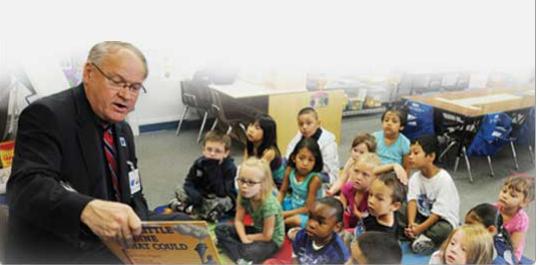
Image from page of Ft. Smith School District

The city council has a person of color among the leaders, tv news reporters come in a variety of colors and backgrounds, and life goes on as it should.

During this time, in our nation, where succession balls are held, the nation celebrates or commemorates it's own Civil War of not too long ago, some wounds are still tender, and some have never healed.  Perhaps some day we will get it sorted out.

Perhaps they should take some lessons from my hometown, where life goes on, as it should.

"I have a dream that little black boys and black girls will be able to join hands with little white boys and white girls as sisters and brothers."   ~Martin Luther King Jr.~


Wednesday, January 5, 2011

"Mustered Out" May 1866, Little Rock Arkansas, A First Day of Freedom

Colorized Image  from Harper's Weekly illustration
of Black  Civil War soldiers  mustered out of service in Little Rock Arkansas
Source: Harper's Weekly, May 19, 1866

One of my favorite Civil War images was depicted in a Harper's Weekly illustration, of black soldiers being mustered out of the US Colored Troops in Little Rock Arkansas. 

The illustration was printed with the caption, "Mustered Out" and the scene depicted is beautiful.  The soldiers were greeted in the middle of the street by their wives and children, and the sight of it all, must have been so moving that a Civil War illustrator, for Harper's Weekly, captured that moment.

Dead center is the man in a loving embrace with his wife.  Her face is not shown, only the back side of her bonnet. His face is not shown, only the side of his head and his cap atop his head as he pours his affections upon his wife, and their embrace can only be described as so tender.

Soldier and wife in loving embrace

But so much more occurs in that image: 

One soldier introduces his comrade, to his wife. The soldier tips his hat to the Mrs. and the soldier proudly holds their child in his arms.

One soldier introduces his army buddy to his wife.

On the far right of that picture, very faintly, there is an image of a lady who stands alone in the street as if looking for her loved one to return.  

I mention her here, because I have to think about my ancestor Lydia Talkington.  Her husband never made it home. He was injured at Jenkins Ferry and later died from his wounds. And I still wonder as Union soldiers returned to her community in NW Arkansas, did she stand to the side, watching such a reunion?  Did her heart ache over and over, as she still scoured the crowd of men, hoping to see her own husband, although knowing that he had already died?  Did she wonder if it had possibly been a mistake and maybe, just maybe he might come home to her? Did such a scene that brought such joy to many, strike a bittersweet note in the hearts of those whose loved ones were lost?

In another part of that image, other soldiers stand embracing their wives and looking around as joy explodes all around them.  Not only were these men of war returning, but these families had a new beginning, a chance at last, at life! They could stay, they could leave, and these men now had a voice in the direction that their families could take!  They had taken the risk, and had won!

Other groups of soldiers with their wives and children

Those of us who research the 19th century whether Civil War era, or not, can appreciate that moments of pure joy were few and far between, for many who lived during those years.  But the pure joy of families reunited, and enjoying freedom for the first time, had to be a special time, for so many of our ancestors.  The fact that historical illustrators were so moved to capture this scene for Harper's Weekly, suggests that to have been there at that moment was special indeed. 

Over the years, as time would pass, images of former slaves were presented as caricatures and people to ridicule and that trend would be placed in magazines, postcards, newspapers, for decades.  

But at this moment at the very end of this War for Freedom, this is an image that viewers of any era, from any place, can understand.

Monday, January 3, 2011

The First Black Marriages of Ft. Smith Arkansas Found in Freedman's Bureau Records


Among the many desires that slaves had once freedom came was to legally marry.  Many men were anxious to marry the woman they loved and have those marriages recognized by the community, the state and they could be considered husband and wife forever.  In the years after the Civil War, for the first time, courthouses recorded the marriages of those who had once been enslaved. Once ordinary life was restored in those communities affected by the war, black men and women rushed to have their marriages recorded. 

The city of Ft. Smith was no different. At the time the war ended, the city had been occupied by Union soldiers---the 57th US Colored Troops. All entrances to the city were guarded by these black Union soldiers, and one can only imagine the impression that many of these soldiers in their blue uniforms must have made upon the local women, who had never seen such a number of free men of color and in uniform no less. It is easy to say that courtships occurred and subsequently marriages followed.  

These marriages were recorded--but not in the Ft. Smith court house.  In fact--these marriages, predated the marriage records found in the Sebastian county Courthouse.

They were performed at the Ft. Smith Bureau of the Office of Refugees, Freedmen and Abandoned Lands. These marriage ceremonies were performed at the Ft. Smith Field Office by Chaplain Francis Springer.


I was fortunate enough to stumble upon a ledger several years ago, and was amazed to find the marriages performed by Francis Springer in 1865 to 1867.

In this image, Nelson Call and Maria (no last name) are married, and
John Shields and Elizabeth Wagner were married.


Isaac McDaniel and Gracie Hall were married by Springer,
as were Peter Harris and Elizabeth (no last name given).

The ledger consists of 17 pages of marriages performed.  Needless to say I was thrilled to locate them, and I have published the names of the marriages on my Arkansas Freedmen website.

Francis Springer is known to those who study the history of the community in and around Ft. Smith, Arkansas. Each one of the marriages that he performed, reflect his signature as the officiating officer. 

It it not widely known that he performed so many marriages at the Bureau. But the records are there, and I have a copy of the entire ledger.

The presence of these Union Army men, and their marriages to women from the community could explain how so many of the same soldiers came to also be buried in Ft. Smith National Cemetery.  Many remained in the western Arkansas area and made it their home.

I was thrilled to find these marriages and am happy to write about these weddings that occurred at the Ft. Smith Field Office of the Freedman's Bureau.


Thursday, December 23, 2010

African Ancestored 12 Days of Christmas

Those of us who have ancestors who were once enslaved, know that once we reach the Wall of 1870, that we will have to research our ancestors during the slavery era. For many this is challenges, for the documents that we seek are often in manuscript holdings, private collections and sometimes in obscure locations. One the last slave owner of one's ancestors has been identified, the tedious search begins. For so many this process takes years, of work. I can only encourage those who have begun slavery era research, and urge you not to be discouraged when the task seems at times, insurmountable.  


I hope that many of you this coming year, will have much success and that you will continue to tell the rich stories of your ancestors, and their resilience. This year for my yearly Christmas wish and the 12 Days of Christmas, I have included illustrations. Therefore, I offer this Christmas wish for your success as you explore these unique sources of documentation as we search for our enslaved ancestors's stories. (Most images are from my own collection, and some are from the public domain.)


THE AFRICAN ANCESTORED RESEARCHER'S 12 DAYS OF CHRISTMAS.
© Angela Y. Walton-Raji


On the 12th day of Christmas these things I wish for thee......


12 Brand new cousins
Image of family and friends at Michigan Reunion 2009


11 Slave Ship names

Slave Ship The Wanderer


10 Birth Records


9 Land Patents
Land Patent acquired by my gr. grandfather
Louis Mitchell Bass of Sevier County, Arkansas


8 Marriage Records
Marriage record of my grandparents, Sam Walton & Ellen Bass

7 Dawes Enrollments
Dawes Enrollment Card of my ancestors
Samuel, Sallie Walton, and family


6 Query Hits

AfriGeneas Message Board for General Queries


5 USCTs.......

Image of 5 soldiers from the famous photo of Company E of
the 4th US Colored Infantry


4  Manumissions
An early manumission record


3 Bills of Sale
Sale Bill


2 Deeds of Gift

Slave Deed of Gift from Texas
(for transcription of document click here)


And Completion of Your Family Tree.


Much success to you for the coming year with your research. 

I hope as you find your ancestors at long last, you will be able to call their name.


Wednesday, December 22, 2010

Christmas Countdown: Our Christmas Tree


While preparing for Christmas, I cannot help but recall the many family celebrations over the years. As I recently decorated our tree this year I reflected how Christmas trees have changed over the years.

When I was young, it seems that the trees I saw in my home and that of people we knew---were always cypress. That was what we always saw sold and what everyone had.  I even found an old family photo of one. It was taken in the early 1950s, and I was only an infant. Apparently my brother had gotten his long hoped for cowboy outfit and was thrilled to pose in front of the tree.

My brother Sam posing in front of
the cypress Christmas tree 1950s

I remember that we had a cypress tree for many years, but eventually the trees changed as the years went by.
In the 1960's like lots of folks----we also had one of those silver aluminum trees.  These has rotating wheels that would change the color of the tree as the color panel changed.  

Our Aluminum Christmas Tree

As I got older I began to voice my own opinion about Christmas trees, and we eventually moved back to green trees, thankfully.  I was also determined to see that we got some kind of pine tree rather than cypress.
So pine trees of different kinds became the standard in our house.

Pines trees became the norm over the years.


We usually placed our tree in either the Living Room or the dinning room, but always near a window. But one year, we placed the tree in between the two rooms between the sliding doors. 

Tree placed between living and dining room.

During my high school years the trees became fuller and I became the one most involved in decorating the tree. I had a ritual.  I would put on Christmas music while my my and I "fixed" the tree. And the tree went back in front of a window.


The year my brother got married, I thought it was important to also get a picture of their first Christmas tree as well.

My brother Sammy's first tree in 1972

I always got myself in the mood for Christmas by decorating the tree with Christmas Music. In this photo the old stereo can be seen and one can see the old turntable that we now used even has records on top, about to drop.


I fondly remember those years, as my grandmother came to live with us, and she would share with us her tradition of greeting everyone with the proverbial "Christmas Gif" from the days of her youth.


Grandma at Christmas 1976

The joy of course came in front of the tree as we all opened our presents.  As children we loved our toys and even the adults seemed to enjoy the thrill of opening our gifts.


My dad opening his gifts on Christmas morning


My mother opening her gifts on Christmas morning

Christmas has always had a special place in my heart.  And now, many years later, my heart is warmed by those sweet memories that my own childhood brought me, and I was comforted by those memories and felt the presence of my mom and dad and grandmother while I decorated the tree this year. 

And this year when we open presents as Christmas music plays in the background those memories will stay in my heart.


And this year, from My home to yours, have a Merry Christmas!


Monday, December 20, 2010

Last Chance to Cast Your Vote!


Tonight at midnight voting ends for the Family Tree Magazine top 40 blogs.  You may vote often for your favorite blog.

I was honored that this blog was nominated as well.  It is located in the Local Regional History Category.


Thanks for voting and for your support!

Saturday, December 18, 2010

Christmas Countdown: A Christmas Story by John Henry Faulk

(click on this link to hear the story)

Most of us have ancestors who came from simpler times, simpler places where Christmas was appreciated when candy canes, big bright oranges, and nuts were among the treats for children. My own grandmother as well as my mother, often spoke of the fruit, nuts and candy and simple these treats were always in our home in the 50s, 60s and 70s.

I found this old NPR Christmas story last  year and found that it was a heartwarming tale, and thought during this week before Christmas that I would share the story with you all here. The story, set in the American south speaks to a spirit of sharing and reflects a season where families of all backgrounds can come together, in friendship and understand the spirit of what this represents.  I hope you enjoy it as much as I do hearing it again and again.

 May we all appreciate the spirit of this season, and may your hearts also be warmed.