Sunday, June 13, 2010

The Samford IHGR Experience


Today  after a pleasant flight from Baltimore to Birmingham Alabama, and I had a chance to meet new and old genea-friends. I am in Birmingham Alabama attending the Samford University Institute of Genealogy & Historical Research all week long.  This is my first time attending and my brief interaction with friends old and new has me excited about the rest of the week! After checking in, at the hotel, I took the shuttle bus provided by the university to the campus to check in and officially register.  As we left the shuttle and approached the library, I could see that a line was already forming outside of the building to get inside.


And a few others were gathering outside of the library door.  I must also mention that it was incredibly hot and humid outside. Temperature over 90 and heat index over 100!


Once inside the everyone politely stood in line to get to the registration desk.


Though the lines were long, no one seemed to complain. Perhaps that was because we were glad to get out of the heat and get inside a nice cool library.

The library staff was warm, gracious and friendly and made everyone feel welcome.  It was one of the smoothest check-in procedures that I have ever experienced.


It was clear right away that they were prepared for us.  Glancing at the conference bags (above) one can see that they have the registration process down to a science, and that made everything go so well.

I am excited about the week, and they have 10 tracks running concurrently, and they are all full.  It appears that the weeks promises to be as exciting as it was meeting new people.

As the days pass, I shall try to share more about this institute and how it unfolds.

Wednesday, June 2, 2010

Finding the Right Amanda and her story: The Rewards & Value of Pursuing Oral History


Telling the Stories of the Past

When beginning an ancestral quest---we all  know that oral history is part of that process.  
Speak to the elders, and speak to them often.  

I was so fortunate when I decided to research my mother's line, to have one living cousin who would share stories of my mother's maternal line the Young family from Ripley, Mississippi. This was the family of Amanda Young.

My mother had a cousin, Frances Swader, who lived in Chicago most of her life. But she was born in Memphis and she grew up in the household with several women--including her grandmother, Amanda Young.  This same Amanda was the gr. grandmother of my mother Pauline.  Amanda was Grandma Harriet's mother.
My connection to anything about Amanda would be through Cousin Frances, with whom I had started talking in 1991, by phone and then met in 1994, while visiting Chicago. 

Frances Swader, 1994
Chicago, Illinois

She was a gracious woman who spoke to me about Amanda, any time I called. She talked about Amanda's  role in the community where they lived in Memphis and she would mention that Amanda moved there from Mississippi in the early 1900s to live with a grown daughter.  Cousin Frances would later give me some information that would connect me to the rest of the family story when I shared with her something that I found.

Facts Known about Amanda Young
 I knew only a few facts---Amanda was a slave in Ripley Mississippi. She had sisters Nancy & Paralee. She had many children, but the only two whose names I knew were her daughters Harriet and Violet.  They too, were slaves of William Tandy Young, of Ripley.  But no more facts were known. 

Now, Cousin Frances did not know much about Amanda's life as a slave, nor her  years after the Civil War.  She only knew Amanda during the years in Memphis.  But she knew more about the daughters and her own early years in Memphis before she moved to Chicago. She shared with me stories of how people in Memphis who knew Amanda, in Mississippi would come to visit her and how she would sometimes help with old remedies when someone was ill. Amanda was the heart of the family and it was her love that all of her grown daughters flocked to.  Cousin Frances spoke about Amanda, and where they lived, in Memphis, and her burial at Zion Cemetery.

My question was---could more be found about Amanda?  

My mother Pauline was raised by her grandmother Harriet---Amanda Young's daughter. Grandma Harriet would often speak about her mother Amanda and their life in Ripley, and when I began researching for my mother's  line, I had one goal: I wanted to find Amanda and tell her story. 

The Search Began
I went step by step and combed through census records in Ripley Mississippi, for months---No Amanda Young.  There were Amandas and there were Harriets---but no Amanda Young  and no Harriet  Young.

But then----another genealogy suggestions was made to me---look for the people---not the family name---look only for Amanda, and Harriet and Violet.  Perhaps I could find 3 people in the same family with those names in that community of Ripley Mississippi.

The 20th century census records did not reveal any such names---nothing from 1930, 1920, 1910, nor 1900.
Ok, perhaps 1880 would hold something since there was no 1890 record to examine.  

But then, I noticed a family in Ripley Mississippi, in the 1880 census---There was a man Pleasant, with his wife by the name of Amanda, and two daughters were there as well----Harriet and Violet!!  My heart skipped a beat!!!  Wow! Had I found them?  But their name---it was not Young---it was Barr.  

Pleasant Barr & Family in 1880

Who were these people?

I phoned my mother and asked if she recognized the name of Pleasant Barr.  "Pleasant who?" she asked.  "Barr", I said.   She did not.  

Enter Cousin Frances again.  Frances Swader was my mother's 2nd cousin who lived in Chicago. She was a delightful woman, a retired nurse and, she was the last person living who actually remembered Amanda Young.   Amanda was her grandmother. 

Cousin Frances was also Grandma Harriet's niece, so maybe she might know something, especially since she was raised in the house where Amanda had lived, the last 20 years of her life.

So, I phoned Cousin Frances and told her, about finding a family with Amanda and Harriet and Violet in the 1880 census ---but they were not listed as the Young family, but as the Barr, family.   

She paused and ever so sweetly said, "Well....I wonder why they did that.  Elijah was the only one in the family who was a Barr."  

"What?" I asked.  "Who?"  And she repeated it, "Elijah was a Barr, but Grandma was a Young."   

Wow!!!!!!  So Barr----WAS a name connected to our family!!! ( Thank you Cousin Frances!!)

I asked her to hold the phone while immediately ran to my census binder to look at the 1880 record.  I hoped that there would be an Elijah in the household---and sure enough---there was an Elijah in the family!!!   

Family of Pleasant Barr 1880, Ripley Mississippi
[Source] Year: 1880; Census Place: Ripley, Tippah, Mississippi; Roll  666; Family History Film: 1254666; Page: 492D; Enumeration District: 194; Image: 0126.

Close up showing Elijah enumerated in 1880


Running back to the phone, I asked her, "Who exactly was Elijah?"  "Well,  that was Grandma's last child.  She had him after the war."   

Did she know Elijah? It turns out she did.  He was much older than she, and had once been married and later divorced, she recalled.  Cousin Frances also remembered when Elijah died in 1919.  He had been in a sanitorium, when he died, and she recalled how Amanda kept saying how she had not lost any children since the War, and now he was gone and how it had touched Amanda so much. Elijah was her youngest---her son with Pleas. 

So----Elijah was a cousin! 

Noting that Cousin Frances was born 1911, she would have had no knowledge of life for the family in the 1880s.  She probably knew nothing about this man Pleasant Barr, who was enumerated with wife Amanda, and the other children.  

AND---now knowing that this was probably my Amanda---it was clear what had happened.  

Amanda remarried after the Civil War, to this man called Pleasant Barr.  

She had other children, who actually used the name Young, but when enumerated in the 1880 census, the head of the house was listed and the others were listed with his surname of Barr. And Elijah was their child after this marriage.

What about 1870?  I looked and there they were again---Amanda and Pleasant Barr, and Elijah and others.

Pleasant and Amanda Barr 1870
Source: Year: 1870; Census Place: Ripley, Tippah, Mississippi; Roll  M593_750; Page: 152A; Image: 311; Family History Library Film: 552249.


  Harriet & Violet were living nearby with a white doctor and his family, as live in servants.  
Harriet and Violet were enumerated with Dr. J. B. Murray in Ripley. 
They were servants in the household.
Source: Year: 1870; Census Place: Ripley, Tippah, Mississippi; Roll  M593_750; Page: 151A; Image: 311; Family History Library Film: 552249.

I realized that the circumstances of their lives were so different from what I had expected, and were different from what oral history had stated.  

But----the oral history was not wrong---it was simply just not complete.

The rest of the story would become clear when I began to look into 1 other mystery----if Pleasant Barr was her second husband, who was her first husband?  

I had heard only 1 story from my mother about some of the men in the Young family.  One story was that we had an ancestor who served in the Civil War. I was thrilled to hear that!  I had longed to find a member of the US Colored Troops in the family.  When my mother mentioned this, of course my question was, "what was his name?"   "I don't know, they never said" she said. 

 There was also an uncle who disappeared--her Grandma Harriet's brother.  "What was his name," I asked.  "I don't know, " she said.   So close---yet so far from knowing.

I was happy to have found Amanda---but---Amanda Young, who was now a Barr---and the descendants only called her Young---hmm.  I was never sure what to make of it.  I printed off the documents and tucked them away in my binder.  I also admit that I was never certain 100% that this was the right Amanda---but the first names matched, even though there was always a tinge of doubt and wonder.

But----if this was the case, following oral history, Amanda was at one time a Young. And she had a husband with that name.  But what was it?  And the children older than Elijah were probably children from that first husband called Young.  

One day, I decided to try to see if I could find a soldier called Young. There were quite a few black men who had enlisted in the Civil War from that community.  Could Amanda's husband have been one of them?
And how about her son---Grandma Harriet's brother he might have been one as well.  I did know that there was a USCT index at the National Archives, which yeilded  hundred of black soldiers with that surname. 

I decided upon a strategy. 

On each Archives visit, (I made a trip at least 2-3 times a month) I would look at the Civil War Pension Index, to see if the name of a soldier who might have served in a unit around Ripley or northern Mississippi could be identified. From there, I would narrow my list down and pull their files periodically, and read them.

So--my next quest began---------As the heavens would have it----I was so blessed---with thousands of soldiers to read---and having no first name---I started with "A" for Aaron Young--expecting to go all the way through "Z" for Zebediah Young, looking for a clue.  

Well I got to the letter B in the index---and something caught my eye!  One document was for a man called Berry Young, with a widow Amanda Young.  Then another notation directed me to a soldier called Berry Kirk--aka Berry Young.   And this Berry had a widow applying for a pension---her name---Amanda Barr!
I had to order the file right away! Both of the documents somehow directed me to the same very thick pension file.  

Berry Young aka Berry Kirk---was a soldier who had a widow Amanda applying for a pension for a  young child.  The mother was Amanda.  Amanda Barr!!!  Amanda Barr!!!!   


Was this Berry Young the ancestor, whose name was long forgotten by generations of women, who had not seen him since 1864?  

Could be possibly be my gr. gr. grandfather? 

The index indicated that there was only an application and no pension awarded---but would the file contain papers to unlock the history of the family?  Was this my Amanda, and was the name Berry, really the name of my ancestor? Was Berry Young my gr. gr. grandfather?

He was! The pension file was rich---so rich and so full.  Berry was Amanda's husband.  Her first husband.

When a Union Army raid came through the area from Corinth, Mississippi, able bodied black men went with them---so Berry left to join the Union army.  So did her son, John---the long lost brother of Grandma Harriet---whose name was also forgotten. And so did her father--also named John.  

Goodness!!!  Amanda's husband, her son and her father----they all left together---and horribly----they never returned after the war.  None of them!

As she said on one of the many depositions in the file----"we never see'd them no more."

Oh what heartbreak!!!   She lost all of the men in her life--- her husband, her father and her son!!   

Freedom came in the middle of all of that chaos---but how bittersweet it must have been!  

No joyful reunion, no loving embrace---just a new status and no husband with whom she could share her joy.  
Just several young children and now no place to go!

But-----the file told the rest that story.  She survived somehow, her older daughters were hired out as servants---serving once again---though on paper they were now "free."   

After 2 years when it was clear her husband was never to return, she met an older man, who was alone--from South Carolina---Pleasant Barr was his name.  

Sketch of an Unknown elder man after the war.  
(No image of Pleas Barr has yet been found)

He had been sold away from his family---somewhere in South Carolina several years before the war--and he too,was now alone, and he too needed a companion. With no way to get back to South Carolina---where would he go? Many families were devastated by the war, and his own family might have relocated to places unknown if he were to go back looking for them.

He saw Amanda, a God fearing woman raising children  with no husband, nor sons nearby to assist.  He visited her often and in 1870, he and Amanda Young decided to share their fate and put their lives together.  
They married in 1870,  I learned after I locating their marriage record, and---they would have 1 child together----Elijah.

More chapters to this story unfolded from that file---but this first chapter came to an end---because I had found Amanda, I had identified her husband Berry, learned of her earlier life in Tennessee, and learned about the painful years after the war. 

The men in her life--all whom she had loved had gone, but I found a woman of courage, who dared to love one more time, and she, Amanda Young---- took our family into the next century.

The Lessons I Learned:

1) I learned how important it is to talk about what you do.  Had I not shared my quest with Cousin Frances and mystery of the Barr family---I might not have ever heard the words, "Well.....Elijah was a Barr."

2) Explore all statements from oral history. Cousin Frances, was adamant that Elijah was a Barr but the others were Youngs. So I decided  upon her insistence, to look for a soldier called Young. I found Berry's file and in it, I found the story of Amanda.

3) Study the history of the region. The search for Amanda & Berry, took me on a journey to learn about the history of the area around Ripley Mississippi. I learned about the recruitment of Black Union soldiers from the area when Gen Rosencrantz sent a raid from Corinth.  I learned about the lives of the refugee slaves who remained behind, and the research exposed me to other stories from the community.

So many more stories came from Amanda's story.  
 -Amanda's earlier life  in Tennessee 
 -Survival of slaves in Ripley after the war.
 -Amanda's sister taken to President's Island, contraband camp in Memphis  
 -The connection of Pleasant Barr to SC and his family left behind
  -The Spight Family of Ripley Mississippi
 -Amanda's connection to the family of William Faulkner, the writer.

Other stories I learned from fellow researchers (Thank you, Melvin Collier, for finding Pleasant Barr's home.)
  -The Barr-Reid family history of South Carolina
  -The founding of St. Paul's United Methodist Church in Ripley.

And a wonderful experience----And in 2006, I had the wonderful experience of making an historic trip to Abbeyville, South Carolina, to visit the origins of the Barr-Reed family.  

I joined Melvin Collier when the Reed/Barr/Puryear clan traveled to Pleasant Barr's homeplace.  You see---Melvin Collier is a descendant of Pleasant Barr's family in South Carolina!
To Pleasant Barr---I owed it to him to travel with Melvin's family, because it was Pleas, who provided family structure once again to Amanda and her children, and so I journeyed with them, to pay him some respect.

More adventures still await me, but I know now, thanks to Amanda's story, and thanks to Cousin Frances, and perhaps some thanks to intervention of the Ancestors---I am ready to undertake the next quest---to find the descendants of Elijah Barr. 

This journey to document Amanda' life and history has taken me down so many paths, and I hope to share many of them here.  

I am grateful to Cousin Frances Swader, now deceased, who spoke to me as often as I wanted to talk to her, sharing snippets of history with me about the life of Amanda Young, my great great grandmother.  Our talks opened doors once the right questions were asked.


Wednesday, May 26, 2010

In the Spirit of Juneteenth: They Fought for Freedom


The legacy of the United States Colored Troops, the black Union soldiers from the American Civil War is a story of extraordinary courage. These were men, who defied their status as men in bondage, and when the opportunity came--they seized the moment, made a dash for freedom and they chose to fight for the freedom of their brethren. 


In in the western theatre of the Civil War, black men served and are buried in countless burial grounds.  In honor of the spirit of Juneteenth which begins a season of Freedom, the men buried in and around my hometown of Ft. Smith Arkansas are honored in this piece that I put have developed to tell the story and to let others know who they were and that so many of them are buried in Ft. Smith, Van Buren and the eastern Oklahoma community. They deserve to be honored, for many decades have passed when they were never mentioned.

These men of honor rest in quiet dignity, and should never be forgotten for they are Freedom Fighters who should not be fogotten. Their story deserves to be told, and hopefully the next generation of children of all backgrounds will know that these were brave men, honorable men and mighty men.

Over 100 US Colored Troops are buried in Ft. Smith National Cemetery, and others have been documented in Van Buren, at Fairview Cemetery, Dripping Springs Cemetery, and in nearby Oklahoma at Shady Grove, and Brazil Cemetery. My colleague and research buddy Tonia Holleman, and I had the opportunity to document many of these soldiers. She and Verdie Triplett trekked through incredible brush and overgrowth to find Brazil Cemetery and located Mobile Boyd and Thomas Blackwater.

The search to document ancestors buried in abandoned cemeteries is just as important as the quest to honor those in the most elegant of burial grounds. All are important and all deserve to be honored. And as June approaches--the season of Juneteenth begins.

In the spirit of Juneteenth, the US Colored Troops---men of Freedom--ther are therfore are honored. Each one had their own unique story of liberation, enlistment, and service. Although most of those precious stories will never be known, at least we can call their names and I have created this small piece to share their honor with the world.

Sunday, May 23, 2010

The Green Book: Reflecting Days From the Past


I often wondered how my parents living in Arkansas and Oklahoma copied during the years of legal segregation, in the Jim Crow South.  My hometown of Ft. Smith Arkansas was a western frontier town but it was also a segregated city.  Although this had not always been the city's past, and the harsh aspects of black people who lived in places like the Mississippi Delta were not as visible in my western frontier town. 

But, there were places we did know were off limits.  We could not eat downtown at Kresses or McCrory's and knew not to try. We had Elm Grove, and dare not venture for years into Creekmore Park. In the early part of the 20th century, we could not take a stroll into the Electric Park.  We could have nice homes--but only on the north side, and only on certain streets.   If visitors came from out of town, they were accommodated by certain people who would take them in.  But how did strangers know who to contact to find a place to stay?

If  one traveled how did one manage? 

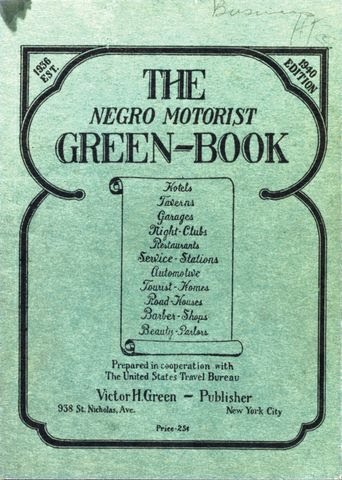
Well, in recent  years I learned about a unique book that was posted on a genealogy list.  Called the Green Book---it was a guide that black families knew to never leave home with out it---for it could ultimately save their lives.

This book was a guide book, published annually by Esso---the same company that would eventually become Exxon. 

Its value was in providing information for black travelers to know what places would offer accommodation, and would save them the humiliation and the dangers of seeking refuge in "the wrong place". I became interested in the book and wondered if there was anything reflecting my home state of Arkansas and the two state area in which I lived---Ark/Oklahoma.  There was. 

Wonderfully---one edition of the entire book exists online.  The 1949 edition is there, and it provides a wonderful glimpse into the communities throughout the nation----and reveals how many people coped with the laws of the day.

Arkansas had a good listing, but I must admit that I was so surprised how a small town like Hope Arkansas had a larger listing of businesses than Ft. Smith--the second largest city in the state.  But---for my hometown of  Ft. Smith, I learned that two homes--which still stand today, were recommended as places to find good clean  and safe accommodation. 


One was described as a "hotel"---the Ullery Inn.  This lovely home of Mrs. Ullery on north 9th street was listed as a convenient place to find  a warm bed and warm meal. Mrs. Ullery's home was known as a boarding house and there were people who did reside in her home over the years.  What a surprise to see that her home was listed as a "hotel" in the 1940s---for it was a house.


Ullery Inn - Ft. Smith, Arkansas

Of course, it was logical that Mrs. Ullery's home was a place to stay.  This neat home was only a block away from what was at one time, the entertainment community in the black part of the city. It was sometimes referred to as "The Block".  Blues and jazz musicians often frequented the jazz clubs and juke joints there, and it is logical that Mrs. Ullery's home would provide a comfort for those musicians traveling through the city.  Occasionally Negro League teams would pass through the city to play local baseball teams, and they too needed a comfortable place to stay.  I still wonder if the Kansas City Monarchs may have stayed there when they came through---or when Willie Mays brought a black all star team to town, if they stayed there, or did they just keep moving through.

A second home surprised me, was also known as a "tourist home". This was the home of the first black high school teacher in the city, educator E.O. Trent. (Trent, born free in Ohio came to the city in the 1880s and established the first stable school and made it part of the city public school system.)  It was, of course also the home of his son, the jazz band leader, Alphonso Trent.  Alphonso Trent is considered a musical treasure and musical legend and is a native son in Ft. Smith.

The lovely Trent home still stands and is occupied by descendants of this illustrious family.  I was surprised to learn that this home was a "tourist" home,  and listed in the Green Book, but then again, son Alphonso, brought his band through quite often, and conceivably other musicians known to frequent the city probably had a relationship with him, and could have been offered accommodation there as well.

The Trent Home on North 9th Street
A "Tourist Home" in the 1940s and 1950s

My next question was of course----what about nearby Oklahoma?  Was it reflected also in the Green Book?  Yes, it was.

In fact, Oklahoma's listing was very impressive.  Towns that I knew were included: Muskogee, Boley, Chickasha, Enid,  Guthrie, Oklahoma City and more.  Muskogee's listing was extensive, hotels, restaurants, barber shops, beauty parlors, and even places where one could get their car serviced. What a glimpse into the black community there!  


Oklahoma Reflected in the Green Book

I learned later that "tourist homes" were basically private homes where individuals had a spare room and often would allow strangers into their home offering safety from hostile roads and hostile towns. They were, in fact the "safe houses" of their day.

Although the book catered to a horrible system of separation and exclusion, thankfully it does provide a glimpse into various communities, reflecting a degree of self sufficiency and support within communities forced to comply with the laws of the day.

It is from rare publications such as the Green Book that one can get a glimpse into the lives that our elders were forced to live.  It gives us a base from which we can form questions when we speak to elders, and more importantly it helps us to tell the story better of our families---for they come from those communities reflected in that book.    As we see the communities and business reflected, we also must learn how our own ancestors coped and we must honor them, even more.

I can go through the Green Book and look at the states from which my ancestors, came, and the cities and towns where people lived, and I know why I must---why all of us, must tell their stories.

Thursday, May 20, 2010

Treasure Chest Thursday - A Family's Bible-A Treasure In Our Midst

The Old Family Bible

How often do we take note of the treasures in our midst?  I lived with a treasure throughout my entire childhood, but did not understand the treasure for what it was.


While growing up, in western Arkansas, for many years, when bored, I would often find myself thumbing through an old family Bible.  The bible was passed to my father when my gr. grandmother Sallie died in 1961.  That bible had belonged actually to my grandfather, but he passed in 1940 and Sallie his mother kept it for many years. Only years later I learned that the original owner of the bible was my gr. grandfather Samuel Walton--the first to bear that name.


Rev. Samuel Walton
My great grandfather, and the 1st of 4 Samuels in the Family

There were some interesting inscriptions in that Bible---a few names I had known--I knew my grandfather Sam was the second of four (yes 4) Samuels in the family, and his name was actually the only name that I knew in that bible.  Grandpa Samuel (the second Samuel) was the one who would eventually become the soldier in the 809th Pioneer Infantry. But who were those other people?  The only person whose name I was really sure of, was my Grandfather Samuel--born in 1891.  And even with his name, I would often stare at wondering if I would ever really know any details about his life.


Inscription in Bible reflecting my grandfather Samuel Walton's birth.

But there were other names, and I would often pull out that Bible and stare at them---Lydia Talkington, Amanda Hunt, Houston Walton, Ethel Sanders.  I knew we had cousins who were Sanders, but I was not sure how they were cousins.  And who was Lydia?  Who was Amanda, and who was Houston?


Pages reflecting Gr. Uncle Houston, Amanda Hunt and Ethel Sanders

Well years later when truly I began to research the family I learned that those were the names of my ancestors. 

Fast forward to my genealogical pursuit and I would learn through a Civil War pension file that Lydia was Samuel's mother. The mother of the 1st Samuel!   And I would learn through a record from the Choctaw Nation, on a Dawes Enrollment Card, that Amanda was Sallie's mother.  Both of these names--Lydia and Amanda, were the names of two women, who were the mothers of each of my gr. grandparents. These women---were my great great grandmothers!

Amanda Hunt!  Lydia Talkington! 

The facts I know about them are still limited, but the questions are multiple:

Both were women born in the 1830s and both died in 1898.  
Did they ever meet each other? 
Did they share stories about their lives with each other? 
Did Lydia travel to see Amanda?  Did Amanda travel to see Lydia? (They lived across the Arkansas river from each other.)
What were the lives like of these two women both born enslaved?  Lydia, I learned was born in North Carolina and taken to Arkansas as a young girl of 5.  Amanda was born in the Choctaw Nation, and lived as a Choctaw slave till she was freed by the Treaty of 1866.

So many questions---but at least I know their names, can say their names, and know who they were and why their names were in that old Bible and those fading pages opened doors for me to find my past.

I later learned that Houston was an uncle---Grandpa Sam's brother.  He died young, so no stories were ever told about him. But his, like other children on those pages had their short lives recorded, and they dwell now among the ancestors, not forgotten.

I am grateful to those who did not discard that old Bible for it offered me the confirmation that I needed to know that I had found my ancestor's names.  That old bible was and is a treasure to me.

A haiku came to my mind as I encountered these names and learned who they were:

The Old Family Bible

Names on Bible page
whisper secrets of the past.
I now call their names


Page reflecting the death date of Lydia Talkington my gr. gr. grandmother

Sunday, May 9, 2010

Sentimental Sunday: Remembering the Mothers on Mother's Day.

My mother Pauline Bernice Walton

Not long ago, I wrote a piece on my grandmother Ellen and my great grandmother Sallie Walton. Both of those ladies were dear to me and were a major part of my childhood. But my heart was my mother, Pauline Bernice Walton. She was an only child, and she was raised by her grandmother and her dear Aunt Viola. Her own mother Lily had died less than two years after my mom was born. Harriet, her grandmother raised her, as did her mother's sister, Aunt Viola.


Mama was to me the very sweetest part of sweet-ness. She always told me though it was from her grandmother Harriet who was so gentle and loving to her. Harriet her grandmother also spoke so often of how her own mother Amanda was so loving to her children. I learned later while doing research that Amanda's mother's name was Martha. Martha, Amanda and Harriet had all been born slaves. And Amanda had been separated at one point in her life from her own mother when she was taken to Mississippi. Oh, the horrors of slavery, a mother and child, no longer could be together! I can only ask---was the heartache of separation that very thing made Amanda hold her own children so closely?

Grandma Harriet would speak of her sister Viola, and her sisters Violet, and Frances, and always of her own mother Amanda Young.  Amanda would speak of her sister Paralee, Alice and Nancy, and their dear mother Martha, whose face they missed all of their lives.  These women--were more than just names--they were the heart of the family. When Amanda would tell the stories of the Night the Stars Fell, she would then speak about her own mother Martha as well.


One of Amanda's daughter, Frances Young Nelson. Grandma Harriet's sister.

When I began working on my mother's side of the family I realized that she came from a line of women--strong women and women whose names I knew before I ever began my genealogical quest.

My mother Pauline's mother Lily died so young, but she was so beautiful and as I look at her face I can only see gentleness, and the way her brother (my mother's uncle) spoke of Lily, she was truly missed so very much by everyone when she died as a  young woman. She was the one that always made them laugh. Perhaps that is why they loved my mother Pauline so much---for she was Lily's child.  All I really know about her is that Lily was known to be a woman who loved life but she like so many of her time, contracted tuberculosis and died a young mother with a tiny baby girl who would become my dear mother. Lily's husband, Sam would also succumb to TB a year later, so my mother was now without both parents. Lily's photo however, would always be there, the mysterious and beautiful young Lily, a flower plucked too soon, as she just began to live.

My maternal grandmother, Lily Martin Moore

But Pauline did not lack love in her life---her grandmother Harriet, loved her and was determined that Lily's daughter Pauline would be a happy child, raising her in a close, nurturing church-centered world in Little Rock Arkansas. And Grandma Harriet would tell her stories including those stories about her own life while a slave in her youth, and in the years of new found freedom and new found joys. She told her stories about her life with her own mother Amanda after the war.

So I listened to countless stories about Grandma Harriet and I also listened to stories about Grandma Harriet's mother Amanda---born a slave in Tennessee, and of their life in Ripley Mississippi.

My mother told me those stories and instilled in me--a love of the past and as a result of hearing those stories, I developed a strong love of those ladies. And because of those ladies and their love of their daughters---my mother extended her love to me.

I would think about these women---these mothers of my mothers, and would wonder where would I fit in this line of women, who could pass the one thing no one could ever take from them---their love.
Now my mother---my dear mother Pauline--whose voice was sweetness and who temprament was ever so gentle, was my heart.

Hers was the voice that guided me, that sang to me, and taught me the love of books, and who encouraged me to go as far as I wanted to go.

It was she, who taught me the pleasures of listening, and the joys of escaping to far away places in the pages of books.

I wanted to do everything my mother did---if she washed dishes, I wanted to wash them too, and was I not happy till she stood me on a chair so I could reach the sink and she let me rinse the glasses. She would tie a dish towel around my waist and I felt like I was so much my mother's child when allowed the stir the batter when she made her wonderful cakes. (And I always got to taste the first of her "samples" before the real cake went into the oven.) And the special treat, was that she would let me taste the batter off of the beaters when she took them out of the electric mixer but not too much--afraid that all that raw batter might make me sick. (It never did.)

Hers were the hands that would rub mentholatum on my chest when I had the flu and she would then place a warm towel on my chest so I could breathe and sleep.

Hers was the voice that sang to me, and the voice that taught me to love music.

Hers was the face I always sought in a crowd, whether after school, or in an audience at piano recitals, or in a school play.

Her's was the voice I wanted to hear when I was older and went to college and when I felt I wanted to be encouraged---hers was the voice that told me to push through, and that I would make it through the exams just fine.

Because of my mother's love and touch and voice, I thrived.  As an adult, I treasured the times my mother came to visit me. We enjoyed our times together--the summer concerts, the day trips, the shopping. No better day was spent, when she and I spent an entire day sitting on the grass at the Boston Commons, awaiting the arrival of Nelson Mandela--his first official stop in America. Amid the thousands who awaited him, and the music and feeling of history being made, she smiled at me at day's end and told me how she never thought she would have a day like that in her lifetime. I was so glad to have shared that with her.

When my mother's health failed, hers was the hand that I held and I had the special gift of having the last words she said to me, to be, "I love you."

My mother was my heart. My life is so sweet because of her, and because of the ladies who passed that love down to the next generation of women and girls who came behind them, I think of them all on Mother's Day.

Thank you Mama for the love you gave me. I hold my head high because of you.

I am Angela Yvette,
the daughter of Pauline,
the daugher of Lily,
the daughter of Harriet,
the daughter of Amanda
the daugther of Martha, the daughter of one frigthened lonely girl, who survived the Middle Passage.....from somewhere in West Africa.........

Thank you all for loving me.

Happy Mother's Day to all mothers, grandmothers, play mothers, god mothers, aunties, sisters, daughters, and women nurturers. 

You are so loved on this Mother's Day.

Monday, May 3, 2010

Remembering the Triple Nickle - the 555th Parachute Infantry Batallion


World War II. The second great war, and one in which our nation was involved both in Europe and in the Pacific. Most soldiers of all colors served the nation with honor, and dignity. 

They fought in battles, many lost their lives, and countless stories went untold. 

My father served in WWII, as an ordinary man among the enlisted men. But when asked, he did speak with pride about his service in Europe nad north Africa.  He would talk with special pride though when he would mention those  "Tuskeegee Men" who made him and his own army comrades swell with pride. Many in the army had heard of the Tuskegee Airmen. 

But Daddy dalso mention some other men who took to the skies, an their story was different.  They had an unusual name---the Triple Nickle.  This was a nickname for 5 5 5----the 555th Parachute Infantry Battalion.  This unit was all black and he would say often now those were "some serious soldiers".
These black men were trained for a secret mission and only decades later, would these stories eventually be told. Most are now deceased, although there are hopefully some who still remain to tell of their mission--a secret mission.

They were men of dignity, serving in a segregated army but when asked, they bailed out of planes for freedom.
In recent years they have been mentioned finally in Washington, and they have been honored.

But their name is not yet a household name.  And it should bem for they served our nation, with honor.

Let us remember the Triple Nickle---the 555th Parachute Infantry Batallion.