Wednesday, May 25, 2011

Indianapolis, and My Time at the Eiteljorg

A View of the Eiteljorg Museum in Indianapolis


Saturday May 21st, I was the guest of the Eiteljorg Museum in Indianapolis Indiana. I was one of the speakers for the Genealogy Day program. The Eiteljorg has an interesting exhibition underway called Red-Black, Related Through History.


Logo for Eiteljorg Exhibition


It was a pleasure to visit this beautiful museum again, as I had the please of speaking there several years ago.  It has expanded, and the events were expanded to include a full day's schedule for the Genealogy Day program.

In addition to speaking, I had the pleasure to spend some time with some of the fascinating members of the Indiana African American Genealogy Society.  Friday evening after arriving in Indianapolis, I had the chance to have dinner with two of the members, Tonya Hull and Caretha Hull. One thing about spending time with other researchers, is that one gets to "talk genealogy" with people who understand.  Both of these ladies were wonderful dinner partners, indeed.

Tonya Hull & Caretha Hull hosted me for dinner on Friday evening. 
(Photo taken by Tonya Hull)

I have to admit that I had two surprises on Friday. When Tonya pulled up beside us, I knew that I recognized her, but was not certain where.  We exchanged our "good-to-see-you-again hugs" and proceeded into the restaurant and had a wonderful dinner.

Our conversation covered everything from current projects to our perspective on the genealogical community in general. I made a reference to a workshop that I attended last summer at Samford, and Tonya reminded me, that yes, she too saw it, for she was in the same session.  I looked at her, at first perplexed, and then embarrassed----gracious---of COURSE I had recognized her!!! She sat next to me for an entire week at Samford!!!!   We had a great laugh about that, and she said, "um  hmm.......I thought you didn't recognize me," Well of course she was right----as soon as I remembered, I also remembered her gadgets that she had in tow and we talked about that as well, (while we chuckled at my temporary amnesia.)

I blogged all week while at Samford and had to look and see if I had captured my seat companion on any of the images.  I did get a partial image of Tonya during one of the lectures:

On the left, Tonya is seen during one of the Samford lectures.

Our conversation we had was wonderful---we shared projects, discussed our thoughts about educating and training genealogists in the future---and we also had a wonderful dinner. (I confess to my excursion into a heavenly chocolate endeavor for dessert, but that's another discussion. )

Then there was Caretha! A friendly delightful person, Caretha had contacted me before I traveled to Indianapolis as she had some research questions that she had.  I was happy to meet her and discuss research challenges with her---and what a delight---this was rare for me---she was an Oklahoma researcher!  And she too researches the Freedmen of Oklahoma!  When she mentioned the communities of Okmulgee, Muskogee and Wybark, I realized that I had truly met a Creek Freedman descendant. We could then discuss findings from Dawes Records, the Dunn Roll, and other resources. This was a rare treat for me, as I rarely meet researchers when I travel, who discuss in depth the various Freedmen records and can engage in them with first hand knowledge. 

Caretha Hale and myself posing for a photo. Ms. Hale is a Creek Freedman Descendant
(Photo taken by Tonya Hull)


Saturday itself proved to be a busy day. The museum had planned a full genealogy day program, and there were exhibitors and dealers in addition to the program of speakers.

I was also surprised to know that a few blocks away fellow genealogist Tony Burroughs was also speaking at another genealogy event as well. Many of the members of the Indiana African American genealogy group had attended his session in the morning and then came over to the Eiteljorg for the afternoon speakers.  

Now, I learned several years ago that the Indiana African American Genealogy Group   is a group of serious researchers, and I enjoyed listening to some of the members speak about their upcoming programs including a research trip to Ft. Wayne, to the Allen County Public Library and the wonderful genealogical holdings there.  This group also hosts an annual conference in October, and they work continuously to mentor beginners in their genealogical journey. I was able to watch some of the mentoring in action on Saturday evening, when Tonya, a true leader, spoke to some of the beginners in her own group about organizing records.

After my presentation, the Eiteljorg also hosted a book signing for me at the museum book shop.  They had a good number of my book "Black Indian Genealogy Research. An Expanded Edition" for sale. Several people purchased a copy and I was able to autograph their copies.

At the book signing, I was happy to meet Dr. Ruby Cain, one of the conference planners for the National Black Genealogy Summit.  It was a pleasure to meet her as well as others whom I met before and after my presentation.

All in all, my experience in Indianapolis was a wonderful one, and I have to extend a special thank you to everyone who made my trip so pleasant: Tonya Hull, Caretha Hale, Tamara Winfrey Harris, Alisa Nordholt-Dean and others made my visit to Indianapolis a wonderful one. 

I left Indianapolis energized and inspired to get back to my own projects and to once again, get busy again.

Saturday, May 14, 2011

In Honor of Patrick, I Was There - The Dedication of the Drennen Home, Van Buren Arkansas.


Image from University of Arkansas Ft. Smith at Dedication of Historic Drennen Home. I attended in honor of my ancestor Patrick who was a slave at this estate. Source: Van Buren Press Argus

This past week was more than amazing.  I had been invited to attend the dedication of an historic home, in Van Buren Arkansas, where some of my ancestors had once lived, toiled and died, enslaved.  

My oldest known ancestor in this line, was named Patrick. I learned of  his history from a Civil War pension file---that from Lydia Walters Talkington.  She and Patrick had been allowed by their masters to court and they had hoped someday to marry each other. However, the times as they were, in addition to fate, would not allow that to happen. But in that file, she discussed how Patrick Drennen was allowed to come and visit her in Dripping Springs, (near what is now Figure Five, Arkansas.) 

From Civil War Pension File of Lydia Talkington, widow of John Talkington(Tuckington) 
a soldier of the 83rd US Colored Infantry

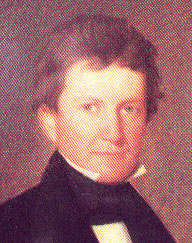
Patrick and Lydia had two children, a son Samuel, and a daughter Harriet. The girl ,Harriet would die while a young girl, but their son Samuel would live to adult hood and he would eventually marry my gr. grandmother Sallie, a former slave from the Choctaw Nation. Patrick, it was revealed was a slave of the Drennen family. This family was headed by John Drennen, founder of the town of Van Buren, Arkansas. Patrick lived with a family of slaves at the Drennen home. (A sister is said to have escaped to freedom while traveling with the Drennens in a northern city.)

Col John Drennen
Portrait of John Drennen, Van Buren Arkansas


This deposition of Susan Austin, a close neighbor of Lydia, mentioned that Patrick was  indeed
a slave of the Drennens of Van Buren, Arkansas.

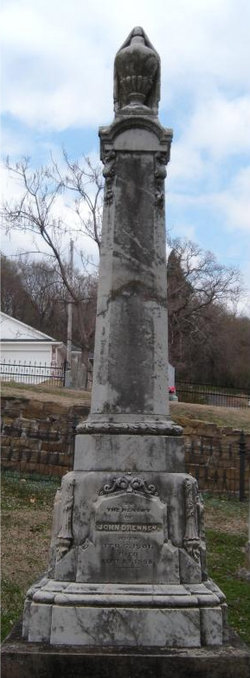
John Drennen died in 1855 and is buried in Van Buren's historic Fairview cemetery.


Col John Drennen

Several years ago, I learned through my friend and fellow researcher Tonia Holleman of Van Buren Arkansas that Lydia was buried at the same cemetery in a family plot down the hill.  Ms. Holleman also discovered from the cemetery sexton's record that Patrick, my ancestor was also buried in the same cemetery.  Interestingly, Patrick was buried in the family plot of the Drennen family.  

She took me to the cemetery and we walked around the plot.  There was no sign of Patrick or where he rests.  He was buried in the seemingly bare space behind that of John Drennen. It was later noted that some small bricks outlined his grave.  These bricks however, are easily missed as grass has now grown over his burial site, however, the space is clearly there, with no headstone.

Last winter while in Arkansas for a conference, I visited the Drennen plot, and could only see one of the bricks faintly showing through the grass and the snow that was melting.  I collected a few dried magnolia tree blooms, and placed them on the stones that outlined his grave.  I wanted to take note of his burial place.

Burial site of Patrick Drennen outlined by dried magnolia tree blooms

About three years before, (in 2008) I had also decide to purchase a small marker to place over my gr. gr. grandmother Lydia's grave.  There was a small family plot down the hill.

Family Plot in Fairview Cemetery

It was Ms. Tonia Holleman who suggested that I also consider placing a memorial marker for Patrick as well.  Since, thanks to her,  I knew that Patrick was buried in that cemetery, and since my family owned the small plot, down the hill,  I could just as well  purchase  a small stone to be placed in his memory.  After all he had lived a full life---though short and for over 150 years he had rested in Fairview cemetery with no marker honoring his brief life.  

So I purchased a small marker for him, as well, and had it placed it place next to the one for Lydia, because they had loved each other, and had planted the seeds for our family line.  And so, it was placed there.

Memorial marker for Patrick Drennen in Fairview Cemetery

However----last week, while at the Drennen Home dedication, something unexpected and very significant happened. After the ceremonies were over, Prof. Wing arranged for a short meeting between myself and the members of the Drennen family descendants.  It was pointed out that Patrick my ancestor was actually buried in the family plot--which they did not know.  It was pointed out that he also did not have a marker.  The question was posed to the family---would they object to Patrick---my ancestor having a stone place in their family plot? I was surprised and my heart was warmed.  

Everyone said that there was no objection of any kind to his having a marker bearing his name in the family plot.  

To say that my heart was warmed, is a mild statement.  All I could say was simply, "thank you, thank you."

So at long last---my ancestor Patrick will have his name place over the site where his body rests.  He will be remembered and his name will be known now by all visitors to the site. They too, will see his name and will be able to say his name aloud.

For me---that moment was the most precious moment of the day.  My journey was more than worthwhile---my ancestor's name will now be known. 

In honor of Patrick I was there. What a special day it was.

Rest in peace, gr. gr. grandfather Patrick.

Wednesday, April 27, 2011

A Pleasant Surprise


While working on a project I needed to have a handy image of my book, "Black Indian Genealogy Research".  Of course, I have one one my desk computer downstairs, but thought there might be one that I would find on one of my blogs.  So I googled the book title and was surprised to see a link to a video appear. So wondering what the video was, it was a pleasant experience to see that someone who had just come from a presentation that I had given, found it useful and informative.

That made my day!

Friday, April 22, 2011

Fun at the NARA Genealogy Fair!


Thursday April 21, was a really full day for me. I attended the National Archives Genealogy Day!  After a ride on the MARC commuter train from Baltimore BWI station, and a quick 3 stops on the Washington DC Metro, I got off at the Archives/Navy Memorial stop on the Green Line.  This puts you directly across the street from the research entrance of the National Archives, on Pennsylvania Avenue.

As one crossed the street the tents were up and everything was right there! I think that people just passing by would see that something was going on and they were immediately drawn inside!

Thankfully, because it was a bit cool on Thursday, the tents had plastic draping to shield the fair from wind and the slight chill, outside. So even though they were outside, they were also inside.

Now, my purpose in being there was two-fold!  I had every intention of attending the fair. After all, I had questions to ask the folks at Footnote, and Ancestry, and I had some workshops that had caught my attention and I also had a little bit of research to do---I had to copy a Civil War Pension file of York McGilbra one of the black soldiers who served in the Indian Home Guards.

The exhibits were loads of fun.  The Archives had various tables, and there were buttons, pens, pencils and tons of give-aways at each table.

"Who are you Looking For?"

Buttons, and brochures and general info on the Archives were on hand for all visitors.

Besides staff from the National Archives there were representatives also from various organizations such as the Association of Professional Genealogists.

Members of the Association of Professional Genealogists


The workshop were quite interesting. I had decided to sit in on one of the sessions, about Free People of Color of New York.  The presenter was  Carla Peterson, a professor and author who shared information from her own family history. Her session was called, Black Gotham. A Family History of African Americans in Nineteenth Century New York.

Carla Peterson, author of Black Gotham

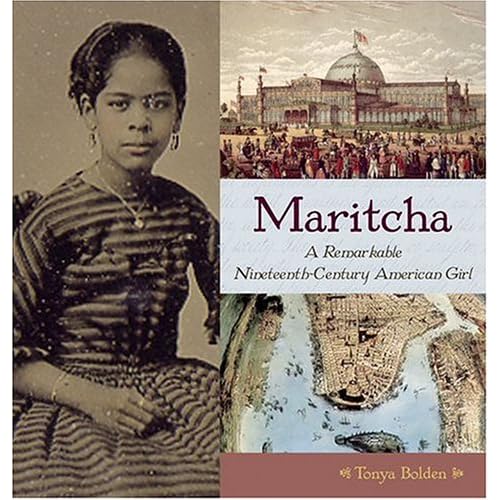
While looking at one of her handouts--I recognized a name.  Maritcha Lyons was one of her ancestors! Wow---Maritcha Lyons!  If I was not mistaken, I have a wonderful story book about Maritcha Lyons. She was from a family of free people of color living in New York, and her family story was depicted in a beautiful children's book called Maritcha. A Remarkable Nineteenth Century American Girl.

Book cover: Maritcha. A Remarkable Nineteenth Century American Girl

I was anxious to chat with the author later, and when I saw her in the bookstore section of the exhibitions afterwards, I went to chat with her.  She confirmed that indeed that Maritcha was the same Maritcha on her family tree, and it was part of Marticha's diary from which much of her own information was based for her book Black Gotham. I was impressed and anxious to purchase a copy of the book, and to have her sign it for me.  And of course I had to have take a photo with her, as well.

Dr. Carla Peterson, author, and myself at the NARA Genealogy Fair

I also enjoyed the presenetation by a group of African American re-enactors, were sharing details on the lives of Civil War era black women.

Re-enactor as Dr. Rebecca Lee Crumpler, first black female doctor shared her life story

  I was even able to capture some of their presentations on video.

Re-Enactment of Dr. Rebecca Crumpler

My day ended as I was able to obtain a Civil War pension file and found some additional information about a black soldier who served in the Indian Home Guards as well.

What an enjoyable day!! I look forward to next year's program!


Wednesday, April 20, 2011

Meet Me (again) in St. Louis

Missouri Museum of History

Last weekend on April 16, I had the opportunity to speak at the Missouri Museum of History in St.Louis, Missouri.  The members of the St. Louis African American Genealogy Society hosted the presentation, and I was very fortunate to have been their guest.

After a rather adventurous trip getting to St. Louis from Baltimore with flight delays and stormy weather, Saturday finally came and the day went extremely well. The people were more than wonderful, and the interest in my topic was very high.

Ms. Maldine Wallace was gracious enough to meet me at the hotel and later Mr. Charles Barker, President of the St. Louis African American History & Genealogy Society, hosted me for lunch with members of the group, and returned me to the hotel.

 
Maldine Wallace, Charles Brown Jr. and Angela Walton-Raji


The room filled quickly before the session.


I found the interest in the topic of finding Indian ancestry to be high, and the attention and questions from the audience was genuine.

Good questions were asked from the audience as well


Delivering my lecture at St. Louis


The group was a fairly large one, and I was impressed with their interest in the topic on researching "Blended Families, Blended Histories."


There was strong interest from those in attendance


Discussing the limitations


I did notice that many were particularly interested when I shared information on the 1910 Special Indian Census.

Sharing an image from the census 1910 Special Indian Census

I pointed out that the Special Census is found in multiple states, including Virginia.

 
Showing Virginia Blended Families from 1910

Some were surprised to see that Indian ancestry was also reflected in military records such as the World War I, Draft Cards.

WWI Draft Card of a Muscogee Creek Indian Draftee

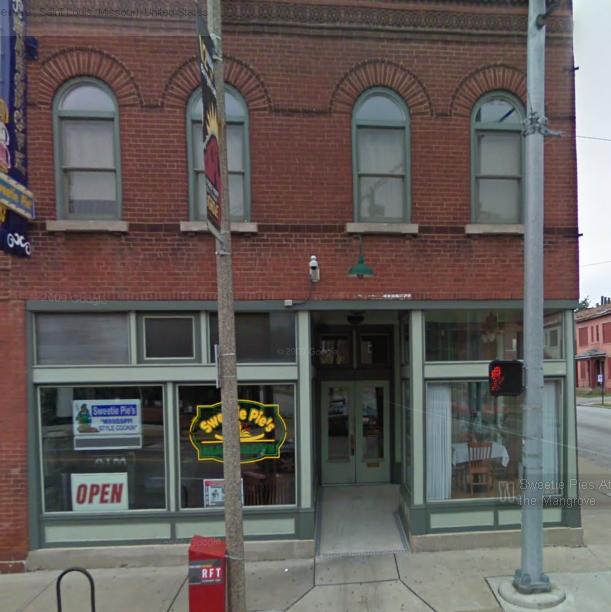
After the session was over, I was able to join several of the members for a wonderful lunch at a delightful restaurant, "Sweetie Pies" in South St. Louis. While there, I was able to chat freely with members who had specific questions about their own research challenges.

Chatting with one of the St. Louis genealogy group members

I must mention that the lunch was more than delicious and the atmosphere at the Restaurant was warm and friendly, and it was a  perfect ending to a very good day. Let me say that again---the food was FANTASTIC!!!

Sweetie Pie's Restaurant, St. Louis, Missouri

The day was a wonderful one for me, and I must thank the wonderful people in St. Louis for the warm reception and their gracious hospitality.  I hope to meet many of them again in the future, and I do want to let other researchers know that there is a vibrant group of genealogists in St. Louis. 

I must admit that I truly enjoyed myself in St. Louis and look forward to going back there again.  In fact I hope that others will also "Meet Me" in St. Louis. They were truly great people, with great food, and I had a great time!!

Special thanks to Maldine Wallace for her arrangements, to Mr. Charles Brown Jr. for sharing his photographs, and Ms. Sarah Cato for assisting me after the presentation and taking me to the Restaurant to join the group for lunch.


Wednesday, April 13, 2011

Hampton Roads AAHGS Civil War Seminar


Last weekend on April 9th I had the honor to present at the Civil War seminar hosted by the Hampton Roads
chapter of AAHGS. (African American Historical and Genealogical Society)

I had the honor to speak and to present at the conference, and Drusilla Pair, well known genealogist and researcher also shared with the audience how her own interest in Civil War history emerged.  I was able to capture a few minutes of her session from the beginning.  As the light was being adjusted I was still able to capture the beginning moments of her presentation.  I am happy to present it here.

Monday, April 11, 2011

Visiting Freedom's Fortress - The First Contraband Camp

Historical Marker for the First Contraband Camp

This past weekend was full of so many experiences. I had traveled to Hampton Virginia to speak at the Civil War Seminar sponsored by the Hampton Roads African American Historical & Genealogical Society conference.  This was an amazing weekend on so many levels, and I traveled down on Thursday to have time to include visiting some historical sites while there.

Many sites were on my list and among them was a special trip to Ft. Monroe. This is the site of the very first
camp for escaped slaves during the Civil War. This was the first contraband Camp.  

I felt a need to visit this place, because I had ancestors who had made it to  a contraband camp. Mary  Paralee Young described how she and others---as they were following the line of Union soldiers, had made a harrowing trek on foot from Ripley Mississippi to Saulsbury Tennessee.  Once there, she and hundreds of others were put on a train and taken to President's Island Contraband camp, near Memphis Tennessee. She remained there until the end of the Civil War.

She described how on route one of the children had become lost but she had to stay on the move.

Statement made by Mary Paralee Young describing their journey to President's Island
Source: Civil War Pension File of Amanda Young

This story is significant in so many ways.

First of all, most of can remember when a woman broke the law of the land in Montgomery Alabama when she refused to sit in the back of the bus any longer.  Rosa Parks started a revolution and the Montgomery Bus Boycott started a revolution changing Montgomery and America as well.

Most of us need to know how three men---slaves of a Col. Mallory of Virginia---these three men, broke the law of the land. They sought asylum at Ft. Monroe a place in Virginia that was still under Union Army control. These three men sought asylum and were granted it by Gen. Benjamin Butler. And these three men---Frank Baker, James Townsend and Sheppard Mallory---began a quiet revolution ----a wave of thousands of slaves---who stood up, and walked to their freedom.  This was a wave began that could not be stopped.

A recent article in the NY Times describes what happened, how the slave owner sought the return of the slaves and how Gen. Butler gave sanctuary to these three men----Frank Baker, James Townsend and Sheppard Mallory--three men whose names we need to learn. They were essentially the "Rosa Parks" of their time.


Image reflecting the appeal of Frank Baker, James Townsend and Sheppard Mallory for sanctuary

The significance of this incident should not be overlooked---for this became the beginning of a wave of civil disobedience and it is the enslaved themselves who should be credited for unlocking the chains of bondage themselves. 

Like the current revolution of the masses that we have recently watched in the Middle East---we need to understand the wave of slaves---who were captured in the newspaper  illustrations of the day-----this wave of humanity---that refused to take it anymore.


Slaves pouring into Ft. Monroe


For me---I had the honor to stand where they stood and to enter the same fortress. I could not help but to stare at that gate---and appreciate the courage of the three men who dared to enter Ft. Monroe the first time.


View In front of the gate leading into Ft. Monroe


A recent article in the New York Times discussed the actual incident of the three slaves seeking sanctuary and it deserves to be shared here:

When Col. Mallory learned that three of his slaves had escaped, he sent a messenger under a flag of truce to Ft. Monroe to have the slaves returned.  The exchange is described as follows:

Cary got down to business. "I am informed" he said, "that three Negroes belonging to Colonel Mallory have escaped within your lines. I am Colonel Mallory's agent and have charge of his property. What do you mean to do with these Negroes?"

"I intend to hold them."

"Do you mean to set aside your constitutional obligation to return them?"

Even the dour Butler must have found it hard to suppress a smile. This was, of course a question he 
had expected.

And he had prepared what he thought was a fairly clever answer.


"I mean to take Virginia at her word," he said. " I am under no constitutional obligations to a foreign country which Virginia now claims to be."

"But you say we cannot secede," Cary retorted, "and so you cannot consistently detain the Negroes."

"But you say you have seceded," Butler said, "so you cannot consistently claim them. I shall hold these Negroes as contraband of war, since they are engaged in the construction of battery and are claimed as your property."

Source: NY Times Magazine April 1, 2011, by Adam Goodheart. Mr. Goodheart is the author of “1861: The Civil War  Awakening,” from which his article in this issue is adapted.

An Unsung Revolution
There was an incredible underground communications network among the slaves. News was often shared from one plantation to another through this amazing network.  The network became critical after Baker, Mallory and Townsend were given sanctuary and declared contrabands of war. As soon as this happened, the underground network became vital and it went into overdrive. 

A wave had taken over the enslaved communities and they arrived by the hundreds.  Newspapers throughout the country began to capture images of slaves walking to freedom---with one goal---get to the Union line!!

Some came in broken wagons
Source: Library of Congress Wood Engraving


Many traveled on foot
Source:  Library of Congress

 But they came by the hundreds.
Source: Library of Congress

With all of this rich history, visiting this incredible site was a must for me, because some of my ancestors were part of that revolution. 

That unsung revolution of the enslaved had spread throughout the land. The underground network had led to the establishment of contraband camps in multiple states. And my gr. gr. Aunt Mary Paralee Young, was among the many who dared to leave and walk to freedom! 

So to honor my ancestors, visiting the place where the dismantling of slavery began--- visiting this place was a must!

I honor them for their courage.