Monday, April 11, 2011

Visiting Freedom's Fortress - The First Contraband Camp

Historical Marker for the First Contraband Camp

This past weekend was full of so many experiences. I had traveled to Hampton Virginia to speak at the Civil War Seminar sponsored by the Hampton Roads African American Historical & Genealogical Society conference.  This was an amazing weekend on so many levels, and I traveled down on Thursday to have time to include visiting some historical sites while there.

Many sites were on my list and among them was a special trip to Ft. Monroe. This is the site of the very first
camp for escaped slaves during the Civil War. This was the first contraband Camp.  

I felt a need to visit this place, because I had ancestors who had made it to  a contraband camp. Mary  Paralee Young described how she and others---as they were following the line of Union soldiers, had made a harrowing trek on foot from Ripley Mississippi to Saulsbury Tennessee.  Once there, she and hundreds of others were put on a train and taken to President's Island Contraband camp, near Memphis Tennessee. She remained there until the end of the Civil War.

She described how on route one of the children had become lost but she had to stay on the move.

Statement made by Mary Paralee Young describing their journey to President's Island
Source: Civil War Pension File of Amanda Young

This story is significant in so many ways.

First of all, most of can remember when a woman broke the law of the land in Montgomery Alabama when she refused to sit in the back of the bus any longer.  Rosa Parks started a revolution and the Montgomery Bus Boycott started a revolution changing Montgomery and America as well.

Most of us need to know how three men---slaves of a Col. Mallory of Virginia---these three men, broke the law of the land. They sought asylum at Ft. Monroe a place in Virginia that was still under Union Army control. These three men sought asylum and were granted it by Gen. Benjamin Butler. And these three men---Frank Baker, James Townsend and Sheppard Mallory---began a quiet revolution ----a wave of thousands of slaves---who stood up, and walked to their freedom.  This was a wave began that could not be stopped.

A recent article in the NY Times describes what happened, how the slave owner sought the return of the slaves and how Gen. Butler gave sanctuary to these three men----Frank Baker, James Townsend and Sheppard Mallory--three men whose names we need to learn. They were essentially the "Rosa Parks" of their time.


Image reflecting the appeal of Frank Baker, James Townsend and Sheppard Mallory for sanctuary

The significance of this incident should not be overlooked---for this became the beginning of a wave of civil disobedience and it is the enslaved themselves who should be credited for unlocking the chains of bondage themselves. 

Like the current revolution of the masses that we have recently watched in the Middle East---we need to understand the wave of slaves---who were captured in the newspaper  illustrations of the day-----this wave of humanity---that refused to take it anymore.


Slaves pouring into Ft. Monroe


For me---I had the honor to stand where they stood and to enter the same fortress. I could not help but to stare at that gate---and appreciate the courage of the three men who dared to enter Ft. Monroe the first time.


View In front of the gate leading into Ft. Monroe


A recent article in the New York Times discussed the actual incident of the three slaves seeking sanctuary and it deserves to be shared here:

When Col. Mallory learned that three of his slaves had escaped, he sent a messenger under a flag of truce to Ft. Monroe to have the slaves returned.  The exchange is described as follows:

Cary got down to business. "I am informed" he said, "that three Negroes belonging to Colonel Mallory have escaped within your lines. I am Colonel Mallory's agent and have charge of his property. What do you mean to do with these Negroes?"

"I intend to hold them."

"Do you mean to set aside your constitutional obligation to return them?"

Even the dour Butler must have found it hard to suppress a smile. This was, of course a question he 
had expected.

And he had prepared what he thought was a fairly clever answer.


"I mean to take Virginia at her word," he said. " I am under no constitutional obligations to a foreign country which Virginia now claims to be."

"But you say we cannot secede," Cary retorted, "and so you cannot consistently detain the Negroes."

"But you say you have seceded," Butler said, "so you cannot consistently claim them. I shall hold these Negroes as contraband of war, since they are engaged in the construction of battery and are claimed as your property."

Source: NY Times Magazine April 1, 2011, by Adam Goodheart. Mr. Goodheart is the author of “1861: The Civil War  Awakening,” from which his article in this issue is adapted.

An Unsung Revolution
There was an incredible underground communications network among the slaves. News was often shared from one plantation to another through this amazing network.  The network became critical after Baker, Mallory and Townsend were given sanctuary and declared contrabands of war. As soon as this happened, the underground network became vital and it went into overdrive. 

A wave had taken over the enslaved communities and they arrived by the hundreds.  Newspapers throughout the country began to capture images of slaves walking to freedom---with one goal---get to the Union line!!

Some came in broken wagons
Source: Library of Congress Wood Engraving


Many traveled on foot
Source:  Library of Congress

 But they came by the hundreds.
Source: Library of Congress

With all of this rich history, visiting this incredible site was a must for me, because some of my ancestors were part of that revolution. 

That unsung revolution of the enslaved had spread throughout the land. The underground network had led to the establishment of contraband camps in multiple states. And my gr. gr. Aunt Mary Paralee Young, was among the many who dared to leave and walk to freedom! 

So to honor my ancestors, visiting the place where the dismantling of slavery began--- visiting this place was a must!

I honor them for their courage.


Monday, March 7, 2011

Finding Civil War Contrabands in Arkansas

Document reflecting "Colony of Freedmen in Arkansas, 1864

While on a recent trip to the National Archives I decided to look into some records from eastern Arkansas, to see what could be learned from the Freedman's Bureau documents.

Remember these facts:
The Freedman's Bureau was created after the Civil War and after slavery was abolished to provide assistance to newly freed slaves as they negotiated life for those first years after freedom.


The Bureau was officially known as the Office of Refugees, Freedmen and Abandoned Lands. 


The Bureau operated from 1865 to 1972, thus, it was a bureau created after the war had ended.

Imagine my surprise to come upon several pages of microfilm among the records of the Bureau, and to see the year 1864!

Wait----1864---the war was still going on and more than 6000 black men had fled to Union army lines and enlisted in the Union Army. On my Arkansas Freedmen website I devote a good portion of the history to the Civil War and I do have general information on the US Colored Troops organized in Arkansas during the Civil War. But imagine my surprise to find, in the midst of a record set pertaining to freed slaves after the war, a set of documents reflecting the fact that a possible colony of newly freed slaves also had formed during the war.

As I looked more closely, this refugee camp for ex slaves was organized, with several schools:  According to the report, there were 6 schools for Freedmen in the city of Helena, and 1 at a site known as Camp Freedmen.

Now this information is valuable for two reasons: 1) It reflects some of the local history----six Freedman schools.  How amazing to see so much interest in education almost immediately.  2) There was an official Freedman's colony.  This is exciting as it indicates as early as 1864 that there was organization being put to work to educate the children and to assist with the adaptation of the former slaves to a new life.

I wondered where this camp---quite clearly a contraband camp was located. Well, sure enough there was more information about the camp.

Location of the Freedman's Camp
Source: RG 105, National Archives M1901 Reel 6


Transcription of document
"The camp is situated on a home farm near the Fort, and in as healthy a location as could be selected and with plenty of water convenient.  Each family has a small garden connected with their house. We have reduced the number growing rations from the government, since the 16th of March, from two thousand down to 2 hundred sixty. Some sickness prevails at the camp but the people appear to be happy with their education and religious privileges." 

There was additional data about this camp.


I had to pause and reflect on what I was seeing. War is a time of chaos and confusion.  In spring of 1864, slavery still had a hold on people in the south and yet, some dared, once the Union Army was close, to make that dash for freedom. Here was a settlement of ex-slaves now breathing their first breath of free air, and there was immediate interest in education and providing structure to their lives that interrupted the pattern that they had known. So as they seized their freedom, there are some documents left that reflect the efforts to bring structure of a different kind into their lives.

Document reflecting those receiving rations at the Freedman's Camp, Helena Arkansas, 1864
Source: RG 105, National Archives M1901 Reel 6

On document listed the supplies listed to run the camp efficiently.  At first it appeared to be list of no historical interest, but then I looked at it again, more closely.


Supply list for Freedman's Colony

On this list was a request for an oil can for the Evening School.  An evening school? 

How strong the desire to learn must have been---there were already six schools in the city of Helena in 1864, and at the Freedman's colony and it also appears that there was an evening school.  

My guess is that it might have been the adults who attended the evening school. The simple inclusion of a lamp for the evening school reveals so much---these people once enslaved were so anxious to get on with their lives, and learning would be their key to a new life and a better life.

Researcher Dr. Alisea McCloud has identified a number of contraband camps in Arkansas  I wonder if any of the camps that he mentioned could have been a camp that emerged from Camp Freedmen.  On her site, Dr. McLeod mentions Camp Deliverance, Camp Wood and Camp Deliverance  Was Camp Freedmen one of those camps?  I don't know the answer to that.

But I glad to see a reflection of what was happening during the war, to the women and children left behind, and to see how they fled and took refuge at the contraband camp, known as Camp Freedmen, I see that by escaping---they formed their own act of resistance---they seized their freedom and began a new life.

There are no images of ex slaves in contraband camps in Arkansas. But their are images of other camps, some reflecting order and some reflecting the hardship even in freedom.


Contraband Camp, Richmond VA
Source: National Archives and Records Administration, Matthew Brady Collection

Another interesting part of this history is the reminder that the Freedman's Bureau also reflected the white refugee population as well.  War bring chaos into the lives of everyone in the community, and the records also reflected portions of the white population also served by the same Bureau.


White refugees were also reflected in this record set.

I did not set out with the intention of studying eastern Arkansas, and was in fact there to research some Civil War soldiers.  But while waiting for the original records to be pulled, I decided to take a look at the Helena Arkansas Field office, and I was able to glean additional information about a community. In this case, the strong desire to learn and to educate their children stood out.  The fact that so many had arrived at the camp, as early as March 1864 suggests that many had truly escaped to freedom.

I will return to continue this search, but was thrilled to find some unexpected data on life in eastern Arkansas, from those who fled to freedom and who lived in those camps after the war.

Thursday, February 17, 2011

The Balanta of Guinea-Bissau---Again!


        Louis Mitchell Bass, born in TN about 1846                

Georgia Ann Houston Bass  born in Arkansas About 1857

Louis Mitchell Bass was my gr. grandfather.  His daughter was my grandmother, Sarah Ellen Bass Walton. 
Now, I have been researching the history of the Bass family for many years, and became interested in the African Ancestry of his line.  Since my brother and I are connected to him through our father's mother,  it was necessary to have a direct male descendant of Gr. Grandpa Mitchell to take the test, in order to follow the direct line, back, hopefully to an African community.   My cousin in Texas, (also known as Mitchell Bass) agreed to be tested, and so I ordered the test and sent the kit to him.  I laid out all details on what was to be done and how to submit the sample and where it was to be mailed. He complied with this, and after several weeks of waiting---the results came.   

So, when that line was tested, it was learned that the direct male lineage of Louis Mitchell Bass indicated that the genetic markers are identical to those of the Balanta People of Guinea Bissau, in West Africa..  How wonderful to also learn that there was a 100% Sequence Similarity Measure.


Certificate Reflecting the African Ancestry of Mitchell Bass 
a direct male descendant from our ancestor, Louis Mitchell Bass

I was glad to have researched this male line already. My dad's mother Sarah Ellen Bass, was Louis Mitchell's daughter. Louis Mitchell's father was a man in Giles County Tennessee, a slave known as Irving Bass. (Note----Irving was also the father of Uncle Sephus Bass and Uncle Braxton Bass---the Civil war soldiers who I wrote about several months ago.) They lived on the Bass estate near Elkton Tennessee.  By testing the DNA lineage, I was learning a small bit about what part of Africa, Irving, or his father, or grandfather may have been from.  Guinea Bissau, is a small poor country in West Africa, and the Balanta people are the largest ethnic group in that small country.

Now the other side-----My grandmother's mother was Georgia Ann Houston.  She was said to have been a slave of Elizabeth Houston Milwee, part of the Houston clan that who moved into SW Arkansas from Alabama.  

Georgia Ann died in the 1930s and I obtained her death certificate.  I was delighted to learn that her mother's name was on the death certificate, and her mother's name was Minerva. Minvera, it was said, was born in Alabama. That matched the movement of the Houston-Millwee slave owners, for they moved into SW Arkansas from Morgan County  Alabama in the 1850s. 

The Houston-Millwee line was said to have originated from South Carolina.  Did they bring slaves with them---Minerva in tow?  

Or did they acquire slaves after arrival in Alabama?  I don't know the answer to that question. However---I did have an interest in learning more about Minerva's line.  Because Minerva's line would reflect her daughter Georgia Ann who was Mitchell Bass's wife and my gr. grandmother.

A word about Georgia Ann. She was the second wife of Louis Mitchell Bass.  His first wife was Susan Houston.  Yes, she too was a Houston, and as fate would have it----Susan (or Susie) as she was called---was the sister of Georgia Ann.  Yes-------Louis Mitchell Bass married two sisters.  Now hold it-----NOT at the same time!

Susan died after her second child was born.  In 1877, Louis Mitchell then married her younger sister Georgia Ann.

Slavery, we all know, produced complex families and this one is not without its complexities.  Susie (the first wife) brought two children into her marriage to Mitchell Bass.  She had two children---Mary and Thomas Dollarhide. They were said to be the offspring of the slave master Judge J.S. Dollarhide. Those children were raised by Mitchell Bass, and later by Mitchell and Georgia Ann after Susie died in the 1870s.  Georgia Ann married Louis Mitchell Bass in 1877, and she brought in one child into the marriage, John Martin, whose father was Adam Martin of Foreman, Arkansas.

The 1870 Federal Census reflects Louis M. Bass and 1st wife Susan
Source Citation: Year: 1870; Census Place: Clear Creek, Sevier, Arkansas
Roll: M593_64; Page: 259A; Image: 513; Family History Library Film: 545563.


In 1877, Louis M. Bass married Georgia Ann Houston.

Record Reflecting marriage of Louis M. Bass and Georgia Ann Houstonm 1877


I mention all of this because by the 1890s, the family had expanded into 3 large clans---Bass, Martin and Dollarhide. The family reunions over the years have been families that descended from either Mitchell  & Susie, or Mitchell & Georgia Ann---and they always included the families that descended from the Dollarhides and the Martins as well.

But when I had cousin Mitchell to take the DNA test for the line of Mitchell Bass----I knew that the results reflected only those with a blood tie to Louis Mitchell and his father Irving.  This would not have included those cousins who connect to us through Susie, and it would not include those who connect to us through Georgia Ann's son, John Martin.

So-----to have a DNA test done that would reflect her ancestry---I needed to have a female---a direct female descendant, of  Georgia Ann Houston, whose markers would be the same as hers and as her mother Minvera's.  

I was not a candidate, because Georgia Ann is my father's mother's mother. My grandmother had only two sisters that had children, and only one of my grandmother's nieces was still living.  There might be other cousins---but I don't know them.  But----Aunt Janie---Grandma's sister---had a daughter Hazel. And Hazel is still living!  She is in her 80s  and has no children of her own---but she carries the marker needed to be tested! Cousin Hazel----we had to get the test to her.

Cousin Hazel Burris proved to be the only direct female descendant who could take the DNA test.

Well, Cousin Hazel is in a nursing home in DeQueen, Arkansas.  About once a month or so, a few cousins who live in SW Arkansas do get to visit her.  So---a kit was purchased---thanks to cousins Norma Jean and Mary Ann---both of whom are granddaughters of Georgia Ann----both pitched in and a kit was purchased!  It was mailed to Arkansas, and several months passed, and nothing came.  

Over the holidays when I got a New Year's phone call from cousin Mitchell, I mentioned that I had mailed a kit to Arkansas for Cousin Hazel, but it was never received.  He knew the person who had the kit, so he agreed to drive from Dallas to Arkansas, to meet the cousin with the kit and they went to see Cousin Hazel and to insure that the sample would be obtained. They got it!!!   And then came the wait!!!!

Well------------today it came!!!!!!!!    

My husband knew I was excited to receive it, so he grabbed the camera as I opened the package.

The package arrived and I was anxious to see what was inside!

I pulled out the familiar packet from African Ancestry.

I then began to read the contents of the letter enclosed.

Reading the details of the letter from African Ancestry

When I read the results---they were the same as Gr. Grandpa Louis Mitchell Bass---they were from the same country, and the same people!

Certificate Reflecting the African Ancestry of Hazel Burris Walker 
a direct female descendant from our ancestor, Georgia Ann Houston


How amazing!!!!  Georgia Ann Houston female ancestor brought to America, had the same DNA ancestry as her husband's.  He had a direct male ancestor brought to America.  Georgia Ann was born in SW Arkansas, and her mother was born in Alabama-- around Morgan County.  Her husband, Louis Mitchell Bass was born in Giles County Tennessee as were his parents. His father was Irving Bass and Irving Bass's ancestry went to the Balanta people of Guinea Bissau.  Georgia Ann's mother was Minerva Houston, and her maternal line went to----the Balanta people of Guinea Bissau.

What are the chances of that happening?  In some places it is not that odd---but slavery, American slavery separated people in such painful ways!!  And yet, in the 1870s, in freedom, two people married, and unknowingly they were the direct descendants of two slaves who came from the same part of Africa.

I marvel at what the chances might be of finding the same country of origin of two people both born enslaved, both with different histories---and later marrying and then----as it turns out----they both had the same ancestral homeland.

Wow!!  I feel so moved that I have been able to find the ancestral home of both of those ancestors--both born enslaved.

My husband as many of you know is from West Africa---and he speaks 5 languages.  As we were discussing this situation about the Bass DNA---he said there is a word in his Yoruba language---that is very appropriate in this sitiation. The word is actually a name:  Omowale 

This is a name found among many people who are Yoruba people and the name has meaning:  The child has come home. I feel that this is a special day, because with both of my ancestors---Louis Mitchell Bass & Georgia Ann Houston---they were both somebody's child and now with this knowledge of who we are, we can proudly say, for both of them, and for their parents and for their descendants "we have come home."  

Omowale !!!

Louis Mitchell Bass, and Georgia Ann Houston Bass, and youngest son, George N. Bass
All are Balanta People!  And now that we know----we too, as their children, have come home!

Wednesday, February 16, 2011

Future Genealogy Conferences


Last week, I had the chance to watch the activities unfold at Roots Tech, even from afar, I can only hope that a precedent has been set for future conferences. Live video streams, online blasts, and blogging centers seem to immediately attract the attention of everyone, and I was delighted to see new blog posts about them.  From  sessions on technology, to the future of incorporating genealogy and technology, I was excited to see the energy coming forth from bloggers. Several have posted a number updates on their own personal blogs about what they saw and what they experienced.

In addition to the activities in Utah, the genealogy community responded quite well. There was a lot of activity unfolding on Twitter, and Facebook and individual blogs also reflected the enthusiasm of what went on. And those of us unable to travel, we were responding as well.  We watched the live feeds with eagerness.

On Friday evening many of us were involved in our own viewing parties across the country, as we watched the latest episode of Who Do You Think You Are, NBC genealogy based program where celebrities learn about their personal history. But we also joined the larger community online to talk about the program as well.

I am pleased that a portion of the African American community responded, to online communication as well,  for many of us gathered in the WDYTYA chat room in the AfriGeneas Chat center, and shared our reaction to the first two episodes.  This is the second year in which we have created a special chat center and watched as a group.  (And how exciting that DearMYRTLE one of the genealogy online stars joined us as well!)

AfriGeneas WDYTYA Chat Room during Program

And---for those of us who just could not get enough----when the AfriGeneas chat ended as the program ended, quite a few of us bumped into each other again, when we joined Thomas Macentee on Blog Talk Radio for a live chat and while he aired his online radio program.  And he came to us live from RootsTech!  

BlogTalkRadio Page for GeneaBloggers Program


The point is----there is a lot going on, technology is making interaction much easier, and in the future, conferences can truly learn from the responses that fellow genealogists have made to the events of the past week.  Social media was used a lot during RootsTech, Twitter, and Facebook, became wonderful tools to hear new ideas from colleagues.

Opportunities to interact were enhanced when Myrt was sharing remarks she was reading on Twitter while she sat on a panel. Effortlessly, she responded to questions, tweeted back to us, and the audience probably never noticed that she was speaking to her Twitter followers as much as she was speaking to them.

The point is-----as we grow technologically, thankfully the genealogy community is expressing itself in many layers and taking advantage of much of the technology. My hope is however, that others will hear the call. Fellow blogger and Twitter user Marian Pierre Louis addressed this so eloquently in her recent blog post on Roots and Rambles. 

I too must ask, will there be a blogging corner at the next AAHGS conference in Little Rock?  How about Black Genealogy Summit in Ft. Wayne? And I can only hope to see more African Ancestored researchers join the blogging community, there is lots of room. The technology is there, and like others who are coming down from the Roots Tech high, I am hoping that others can see the possibilities.

We are limited only by our imagination.

Saturday, February 12, 2011

"I Ain't Seed Them No More"

Words taken from the deposition of Amanda  Young about her husband, father and brother.

When researching ancestors who were enslaved---there is one critical moment that is missing from many of our stories---what happened during those first moments of freedom!  

How did it happen?  How and when did they actually know that they were no longer slaves? We know that we find our families in 1870 and we know that we cannot find them in 1860, because they were enslaved.  So-----what happened?  How did freedom come to them?  One day they were slaves, and the next day, something happened and they were free.

Did an announcement simply get made after sunrise that they no longer were in bondage? 

Was it a rumor that spread throughout the town that they were no longer slaves? 

Did some make a daring dash to freedom in the middle of the night?  What happened?

This is not always something easily answered, for my own ancestors left no letters, or diaries, or memoirs behind to find out. But--thankfully for me----a series of depositions were taken when my gr. gr. grandmother Amanda Young applied for a  widow's pension and a mother's pension for her husband and son, who had left to join the Union Army.

Her husband left, when the Yankees came, as did her son, and her father and as she put it, she  never saw them ever again.  Wow.  How incredible---how tragic and what an impact this had to have had.  She lost the three men she had ever loved. One day they were together, even if enslaved, and the next day they were gone.

These days in our 21st century world, war is hard to imagine. Even harder to imagine war for those whose freedom was at stake.  How did it happen?

I learned from the Civil War pension application, that my gr. gr. grandmother Amanda Young, did not escape the trauma of war, nor did she escape the heartbreak of war.  A raid had been sent by a General Rosencranz who was in the area into the community of Ripley Mississippi. The Federal soldiers had come from Corinth Mississippi, to the east, into the small towns and villages of Tippah County, Mississippi. The lived in Ripley and when the raid came, long dreamed of freedom would come, but not without a price.

When the Federal soldiers came into this small Tippah County of Ripley, community---the chance to dash for freedom came, but it came quickly and they had to make a choice fast!  Time was not always allowed for deliberation---they were given a moment's notice at times, and many knew the risk was worth it, and so they took their chances going with strangers to unknown places---they were taking a chance on freedom!

Amanda Young would never see her husband after the Yankess raid, he would never return.  She would also not see her own sister Mary Paralee, however, 50 years after the war ended, and she was still asking questions about her husband, and son, and it was then, that she would find her sister, living in Memphis.  Her sister Mary Paralee, testified on her behalf,  sharing in a sworn deposition of  part of what happened when she and others fled behind the Union soldiers.

Deposition of Mary Paralee Young, sister of Amanda Young

I realized upon reading this deposition, that she was describing what actually happened when a group of slaves left where they were living, and where they went, as a group.  Their lives were instantly transformed!  They were liberated and they were fleeing to freedom!  She continued:

Mary Paralee tells how she was taken to Memphis to a contraband camp


Incredible information---President's Island Contraband Camp!!! Wow----where was that?  I had to find it!  She left with children in tow, following the men.  From there she made it to Saulsbury Tennessee, and a train was there, taking them to Memphis!  This scene has to be imagined!  A raid of Union soldiers came through Ripley---and they simply left when the chance came!!!

How hard to imagine!  I looked at a map to see where Saulsbury Tennessee was from Ripley Mississippi.  They are not close. Making this trek over land, had to be difficult, covering miles and miles on foot, carrying few possessions, and crossing unknown territory.  


Contrabands, on the move.


Where was my Amanda? 
Why didn't she leave with them?  
Why stay behind? 

The trauma and drama described when they were on the run, is evident!  A large contingent of slaves made the run to freedom, included Amanda's daughters Nancy and Alsie. But not all of them made it to Tennessee, for as Mary Paralee described it, apparently Amanda's daughters "broke down" on the road.


Describing the journey on the road through the woods.

As I read that deposition I realized of course---this journey was being made on foot.  They were trekking through the woods, simply following the Union Soldiers, heading to a destination that was unknown to them. There would have been little time to stop and at that moment---it would have been all persons for themselves.  I try hard to imagine how the family became separated, and what happened when Alisie and Nancy simply "broke down."  These were Amanda's daughters. These were my gr. aunts!!!  They were aunts whom I would never know.

They would have been young girls---and they broke down on the road, while others kept moving. They never returned to Amanda, and chances are, during that fateful run, they may have simply died.  Oh the heartbreak!!

And in Amanda's case---for some reason she could not go with the others.  Her husband, her father, her son, her sister, and two of  her daughters---all gone, and as she put it:


Oh what price freedom!  It would be 50 years when Amanda would even see her younger sister Mary Paralee again, and 50 years to learn where some of them had gone.  Paralee was living in Memphis and when Amanda had moved there, to be near another married daughter, only then would Paralee be found and the sisters reunited and that small story of her daughters and their fate, be told to Amanda.

The fate of her husband, father and son, would be never be known.  

I still search for them, to this very day.


Friday, February 11, 2011

NBC Program WDYTYA Corners Attention of Genealogists Nationwide

Joining AfriGeneas Chat While Watching NBC's program WDYTYA

Well after waiting many months, the 2nd season of NBC's Who Do You Think You Are began last week. Like many genealogists, I was looking forward to the program, and also to joining other close genealogy buddies as we watched it together and chatted about it online, as the show aired.

Vanessa Williams, known singer, and actor was featured and several of us were delighted to see some changes from the last show.  We were thrilled to see that the recaps after each commercial break were now gone, and the featured guest was somewhat involved in their own research.  Vanessa Williams' ancestors David Carll, was known to several researchers already, and one of the chatters in fact shared additional information about the ancestor, on her own blog. 

More than 20 people gathered in the AfriGeneas Chat Center, to share their thoughts about the program and to discuss the methods used.  Good ideas and suggestions for newcomers were also shared in the chat. Most of the chatter occurred during the commercial breaks, as many were anxious to watch as the show unfolded.

AfriGeneas Chat Center Filled as Member Around the Country Joined in While Watching

The group viewing began last season and has continued into this 2nd season, as well. In addition to the group watch on AfriGeneas several members also tuned into Blog Talk Radio after the show aired, to join other genealogists with a radio program hosted by Thomas Macentee.  The two hour show was a success with well over 45 people listening in and calling in to chat about the show as well.

The fact is that genealogists are connecting in number of ways, using social media and online features while watching the genealogy program air.  Many were sending out messages to the larger genealogy community on Facebook and Twitter as well, and it is clear that a combination of methods have become commonplace among many who share our passion for genealogy.

Tuesday, February 1, 2011

Appreciating Black History Month From My Hometown

A collage of images of Ft. Smith. All images represent African American History


My home is western Arkansas, on the banks of the Arkansas River. Ft. Smith Arkansas is a city rich in history and I have a strong appreciation for the rich history of the black population that occupied this frontier town.

From the earliest days, Ft. Smith was a city that had people of color, and in fact free people would occupy the land before slavery was introduced to the area. One of the earliest residents was recorded in the first census taken in the state--which was 1840.

Ft. Smith 1840 Census. Names at very bottom were free people of color. In this image John Turner & Peter Colder were among the city's first residents. Both were free people of color.


Two of the earliest known black residents of the city in 1840

Civil War
And the story cannot be told without telling the story of the Civil War, and the regiments that came through Ft. 
Smith. One black regiment was organized in  Ft. Smith---the 11th US Colored Infantry. I shall commit myself to telling the stories of the Black Union men and the Black Union regiments that served in Ft. Smith.


Document from Military Service Record of Theodore Anderson who joined the Union Army in Ft. Smith in March 1864, entering the 11th US Colored Infantry.  Source: National Archives Military Service Records

Photographed by Tonia Holleman of Van Buren, Arkansas


BLACK FRONTIER HISTORY
With Ft. Smith being a frontier town, the richness is strong in the history of the US Marshals who served out of Judge Parker's Court. The most famous was Bass Reeves, but there were many other African American men who also rode for Judge Parker as US Deputy Marhsal.


Bass Reeves, US Deputy Marshal

 
Neely Factory one of Judge Parker's Deputy Marshals
Photo from Collection of Tonia Holleman

Many who know the history of Judge Parker also point out that the bailiff of his court was George Winston an educated man who moved to Ft. Smith after the Civil War.

George Winston, Bailiff in the Court of Judge Isaac C. Parker

EDUCATION
Education has been the goal since Freedom came. Educators for Freedman schools came from Ohio and by the 1890s the city had a high school.  Judge Isaac Parker gave out the diplomas for the first graduating class in 1892.  The first principal was Prof. E. O. Trent from an educated family of free blacks of Ohio.


Prof. E. O.Trent, first black high school principal


Mahulda Arrington, first black female permanent teacher in Ft. Smith
Source: Sidney Rowell Reynolds


When Lincoln High School was built it was a red brick building. It was later painted white to the image that most people recognize.

Source: Gene Mccluney Ft. Smith


The main building at Lincoln High School in the years before it was closed
Source: Gene Mccluney, Ft Smith


CHURCHES:

There are many beautiful churches old and new in the city, and they stand as places that held the community together over the past 140 years.  The denominations cover a wide range from Baptist to Methodist to Catholic, Church of God, Seventh Day Adventist, all were found in the Black community of the city! Theirs is a rich legacy of a diverse people within the smaller community.  Some of the older buildings, stand and still hold services and some have closed and now only the tree lined streets speak the sweet hymns of the past.

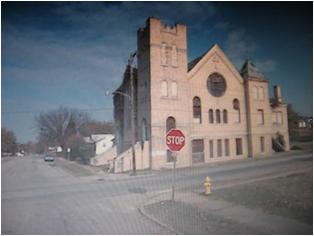
Malalieu Methodist Church, now closed was one a major part of the religious pulse of the community.  
Though now closed the structure, though fragile, still stands on North 9th street

This beautiful old structure is Quinn Chapel AME. Services still continue at this church after 140 years.

From 1917 to 1967, this was the only all black Catholic Parish in Western Arkansas.  
A parish school was also a part of the community and both closed in 1967.


The history of my community is a rich one, and my goal is to continue to share the wonderfully rich stories from this community as well as others that I have had the opportunity to study and learn about over the past 20 years.

As today is the beginning of Black History Month, I appreciate the history of people large and small, and their contributions to the growth of a community.  History is sometimes the story of the famous, but for me it is the story of the communities and their people from which we can all be proud.