Wednesday, June 4, 2014

Remembering Pvt. Louis Bass

Pvt. Louis Bass
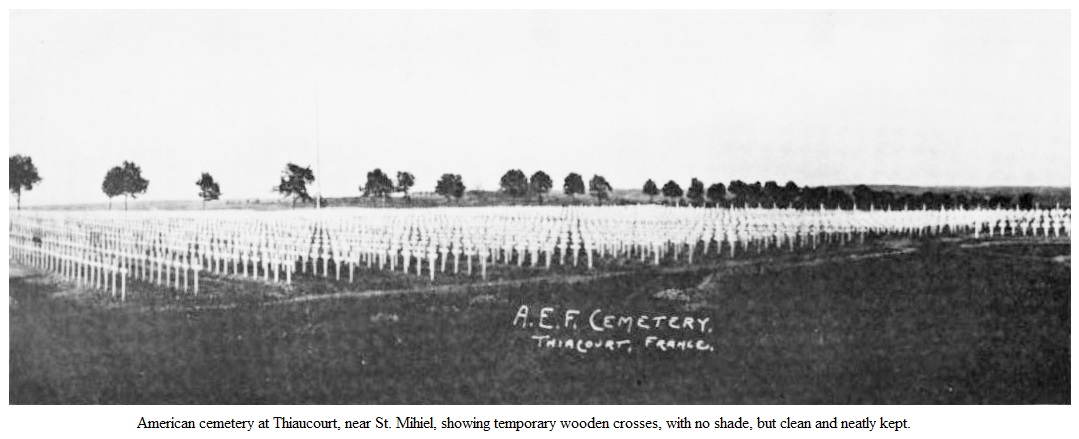
St. Mihiel American Cemetery, Thiancourt France

Pvt. Louis Bass died on June 4, 1918. He was a quiet man from Horatio, Arkansas, who was serving in the 309th Labor  Battalion in France when he died. He never made it home, and the family has never seen his gravesite. But at long last a color image of his headstone and his final resting place has been shared and it can be treasured by following generations forever.

In a previous article, I wrote about my great grandmother Georgia Ann Bass whose son Louis Bass died in France. She was eligible to make a trip to France to visit his grave as a Gold Star Mother. But she was getting on in years and was unable to travel to France. She also did not live too long after the invitation was received. But had she been able to make the trip, this is the grave site that she would have visited, for this was the son, whom she had lost.

Today on the 96th anniversary of his death, the American Battle Monument Commission, posted the image of his headstone, and honored him.

This is the perfect ending to the story, and now thanks to technology, although our great grandmother never got to see this image, now the entire family around the world can see this headstone and view his final resting place.

A humble man from Horatio Arkansas who rests in France can now be forever remembered.


********************************************************

Thursday, May 29, 2014

Remembering Sojourner Truth

Sojouner Truth

Ain't I a Woman


"Well, children, where there is so much racket there must be something out of kilter. I think that 'twixt the negroes of the South and the women at the North, all talking about rights, the white men will be in a fix pretty soon. But what's all this here talking about?
"That man over there says that women need to be helped into carriages, and lifted over ditches, and to have the best place everywhere. Nobody ever helps me into carriages, or over mud-puddles, or gives me any best place! And ain't I a woman? 
"Look at me! Look at my arm! I have ploughed and planted, and gathered into barns, and no man could head me! And ain't I a woman? I could work as much and eat as much as a man - when I could get it - and bear the lash as well! And ain't I a woman? 
"I have borne thirteen children, and seen most all sold off to slavery, and when I cried out with my mother's grief, none but Jesus heard me! And ain't I a woman?
"Then they talk about this thing in the head; what's this they call it? [member of audience whispers, "intellect"] That's it, honey. What's that got to do with women's rights or negroes' rights? If my cup won't hold but a pint, and yours holds a quart, wouldn't you be mean not to let me have my little half measure full?
"Then that little man in black there, he says women can't have as much rights as men, 'cause Christ wasn't a woman! Where did your Christ come from? Where did your Christ come from? From God and a woman! Man had nothing to do with Him.
"If the first woman God ever made was strong enough to turn the world upside down all alone, these women together ought to be able to turn it back , and get it right side up again! And now they is asking to do it, the men better let them.
"Obliged to you for hearing me, and now old Sojourner ain't got nothing more to say. "

Remembering this amazing woman who said so much.

Monday, May 26, 2014

A Forgotten Song from The Great War

A Forgotten Song from WWI


One often hears songs from WWI and WWII and has seen them played on film in countless musicals. However, few if any have ever seen many depictions of Black soldiers and the songs of the era that stimulated the public and kept the public aware of their efforts in "The Great War".

What a pleasant surprise to find some old sheet music reflecting the role of Black soldiers and their contributions to the world's fight for democracy.

W.J. Nickerson wrote such a piece devoted to the "Colored Soldiers of the U.S.A." This song along with others taken to Europe during WWI, not only motivated the soldiers, but it exposed jazz---America's music to the world.

Nickerson the composer was a noted man of music and was said to be the teacher of Jelly Roll Morton and others.

In the book "Scott's Official History of the American Negro in the World War" it was stated that the song had "a lively step and a resonant swing..."

Excerpt from "Scott's Official History of the American Negro in the World War." p.314


Such songs long forgotten deserve to be heard again and hopefully someone with musical talent and an interest in history, will pull out their instruments and let the notes fill the air again.  

Musical Score of Colored Soldier Boys of Uncle Sam


Musical Score of Colored Soldier Boys of Uncle Sam

Let the music be heard once again!

In Their Memory


My Civil War Ancestors

Today, I am remembering my Ancestors who have served their country today. From those who fought for their freedom, to those who served in distant lands, they are still loved, and will not forgotten.

My Ancestors from the Civil War

Ancestors From World War I


Remembering my father who served in WWII


Wednesday, May 21, 2014

The African American Gold Star Mothers Who Went To France


Several weeks ago, while speaking with a cousin in California, she asked me if I had ever seen the letter inviting my gr. grandmother Georgia Ann Bass, to France.

"What?" I said.
"To France," I asked.
" Oh yes, she received a letter inviting her to come and visit her son's grave in France," she explained.

I know that I had never seen such a letter and found the concept of such a letter somewhat unbelievable. I wanted to see that letter, and my cousin promised to search for it, as she had a copy of it.

As far as I know, my gr. grandmother Georgia Ann Bass never left Arkansas. But she, like thousands of mothers around the world lost a son in the effort to bring peace in a far away land and to preserve democracy.  And ironically, she, like many women of color, gave a son who would never have had the freedom in America, compared to the respect and treatment that he experienced in France before he died. Because he was a American Black soldier in France, World War I.

The soldier was Louis Bass, and he was my grandmother's brother, Louis Bass, of Horatio Arkansas who died on June 4, 1918 and is buried at St. Mihiel American Cemetery in France.

Pvt. Louis Bass, of the 309th Quartermaster Labor Batallion

St. Mihiel American Cemetery, Thiancourt, France


But I have known this much about my gr. Uncle Louis for years. So what was this about an alleged invitation to visit France? I had not heard of this particular story.

Knowing how the US Government treated black soldiers, in World War I, and how they were treated, I was still trying to figure out the veracity of the invitation, days after she told me about it.

My cousin went on to say that Uncle Louis served in a French unit and France was going to assist our gr. grandmother mother who had lost her son, to come and visit the graves of  her lost loved one. So while I have been waiting for a copy of this invitation, I decided to see what I could learn about mothers who lost their sons in World War I, going to France and if my great grandmother Georgia Ann Bass would have received an invitation.

Well, I must admit that was quite surprised to find that my great grandmother truly might may have been invited to travel, after all.

However, it turns out that Louis Bass served not in a French regiment, but in the 309th Quartermaster Labor Battalion, an American unit. Now, I don't know many of the details about his experience as a soldier, nor of details that led to his death, but I do know that he died in France in June 1918, and as I mentioned above, he is buried in the St. Mihiel American Cemetery.

But what surprised me was to learn that there was an invitation extended to women to travel to France to visit their loved one's final resting place. The invitations were made to the Gold Star Mothers. My gr. grandmother Georgia Ann, was a Gold Star Mother! That meant that she had lost a son in World War I.

Well in an effort to learn more about the Gold Star Mothers going to France, I found an amazing drama.
I found the answer to that question easily enough by simply using Google search engine. I typed in "Gold Star Mothers travel to France", and surprisingly an article about Gold Star mother pilgrimages came up from the National Archives magazine, Prologue. What made the article particularly unique was that one of featured mothers in the article was a African American woman called Katherine Holley, and it told her story of her pilgrimage to France to visit her husband's grave.

And the article also explained the history of how these pilgrimages came to occur.


I learned that there were six voyages that contained Black mothers and wives making their pilgrimage to France. The year was 1930, and several thousand women were invited and among the more then 6000 who made the trip, about 300 of them were women of color.

So did Grandma Georgia Ann Bass travel to France?

No, she did not. I wondered why.
Was she simply not well enough to travel?
Was she possibly not able to afford the trip?
Was she perhaps too afraid to undertake such a journey?

And then even more questions arose as well.

Could anything be learned of the women who did travel?
Are there photos of them?
What were some of their names?

Well I went researching again, and to my surprise, there are some photos and there are also articles in the press. In fact, in 1930 the experiences of the Black women made most of the headlines!

Apparently there was an amazing and yet sad aspect to the story of the mothers traveling.Women of color were going to be required to travel under the restrictions of Jim Crow segregation.  White mothers were accommodated on luxury ocean liners. Black women would be transported on merchant steamers---cargo ships.

They had to travel on freighters! Their sons had died for their country, and years later when given they chance to visit their graves these women had to travel on freight steamers! What irony! The ancestors of these women came across the Atlantic as cargo when brought to America as slaves. Centuries later in the 20th century---after losing their sons and husbands who died for their country--they had to cross the Atlantic on cargo ships---still not treated with the dignity that these grieving mothers and wives deserved.

The press addressed this sad story frequently that year.

From the Baltimore Press:


From the Pittsburgh Press:


From the the Chicago Press:


Clearly the story was a major one. And what happened got the nation's attention, because many of the mothers who were eligible to travel, suddenly turned it down rather than suffer the indignities offered to them by a government too afraid to address the sentiments of race based public policy. Many of the mothers simply said "no" and upon arrival in New York to sail, they turned it down. They had given their sons and yet they were still to be given a different treatment upon departure so that others would not be be "offended" by their color.The protesting mothers decided that they would not take the trip to see their son's final resting place, for one simple reason---they were going to be required to travel under the restrictions of Jim Crow segregation. To for meant that they approved of the US's racial policy of "seperate and unequal".

But yet, a few dozen women left on each voyage in spite of the second class treatment. And I was able to find the names of a few of them by looking at Immigration and arrival records on Ancestry. This was a roster of those who returned from one of the final voyages in 1931.

Immigration roster of Gold Star Mothers returning to the US in 1931
Source Citation: Year: 1931; Arrival: New York, New York; Microfilm Serial: T715, 1897-1957; Microfilm Roll: Roll 5012; Line: 3.


Source Citation: Year: 1931; Arrival: New York, New York; Microfilm Serial: T715, 1897-1957; Microfilm Roll: Roll 5012; Line: 3.


I admit that since my own great grandmother was invited and did not travel, I have to wonder, did she eventually become one of the women who decided not to go, in protest? Or was she simply not able to travel?

Sadly, no one is living who knows the answer to this story.

But several dozen went anyway, and I wanted to also know their story, and I wondered if anything could be found about their experience.

Well one surprise came to me from a most unexpected place----EBAY!!! Yes, everybody's favorite online auction--there was a photo of some of the Gold Star Mothers themselves! There was a high resolution image of the women who did travel, and their reception in New York that was broadcast by WNYC radio.

Image of Gold Star Mothers Reception in New York before departure.
Image originally appeared in Crisis Magazine in 1930
Item was recently sold on Ebay

I found a second image also on Ebay of one of the Gold Star mothers visiting the Tomb of the Unknown Soldier while in Paris, France.

Gold Star Mother Signing Book at Tomb in France.
This item also recently sold on Ebay.

And while searching for yet more information what a surprise to also see a clipping from a newspaper showing the radio listings of the day. On the listing was the day's schedule which included the program was to be the live broadcast of the reception of the Negro Gold Star Mothers at City Hall in New York City. I wonder if old recordings of that broadcast still exist in New York. Perhaps someone with contacts at WNYC radio, will know if such a copy exists in their archived holdings.

Old Radio Log Showing Mayor Walker's Reception of Gold Star Mothers in New York City


I never expected to find so much about Gold Star mothers. 

To learn that my own great grandmother Georgia Ann Bass was among that class of women is exciting! The story of her having been invited to France was truly interesting, and I still await the letter that my cousin saw in her collection of family items. 

As I began to explore whether anything could be learned, I found so much more. The story of the Gold Star mothers is an amazing one, and the story of the events that surrounded the African American women saddens me, but I think, I also understand both sides-those who did not go, and those who chose to go.

I fully comprehend the sentiments of the women who protested and who refused to travel under the heinous system of Jim Crow segregation. Yet, I also fully understand the reason why those who did choose to go, why they went anyway. They had sons, and husbands to finally put to rest, and the chance to bring that closure to their loss and to be close to their loved one's resting place was important.

My uncle, Pvt. Louis Bass gave all he had in the fight for democracy. Whatever happened on that fateful day in June, 1918, is not known, but I do know that he fell for his country, and though his country did not love him back, he was still a noble man. 

I someday hope to see his grave, and though my gr. grandmother Georgia Ann did not get to see her son's grave, I know that his mother called his name so many times when she lost her son, and I dare too, to call his name now, and I shall say it aloud on this Memorial Day.

Pvt. Louis Bass was never forgotten by his mother, and shall not be forgotten by me.

His mother, Georgia Ann Bass, was a Gold Star Mother, and the pain of her loss cannot be described because mothers should not have to bury their sons. 

But hopefully the actions of the men of all colors who won the "The Great War", will be remembered . 

And on Decoration Day, this year, I shall think of them both.


Sunday, May 11, 2014

Treasured Publications of the Past

Front Page of Colored American Magazine May  1900

I enjoy looking at old publications because there is so much that can be learned. Of course the obvious is found in the stories that were featured in each issue, however, I have also come to appreciate the amazing history outside of the featured stories. In the many historically black serials and newspapers as well as post Civil War era books, one can glean so many additional features, by taking note of the other clues found in the very parts that comprise the publication itself. The mast head, the title page and even the ads are enlightening to the 21st century reader.

Recently I was thrilled to see some digitized issues of The Colored American Magazine, from the early years of the 20th century. This month will mark the 114th anniversary of the emergence of this publication and though largely forgotten, those of us who study history should be aware of this publication and the impact that it had on the readership. The Colored American Magazine was also one of the very first publications in a magazine format specifically devoted to a primarily African American audience.


The magazine was a collaborative, and was produced by the Colored Co-Operative Publishing Company. The magazine was mostly a literary journal and it published works by the known authors of the day, including  the well known and respected Pauline Hopkins. Ms. Pauline Hopkins, a novelist and writer born in New England, who became a frequent contributor to the Colored Co-Operative. 

Pauline Hopkins, writer from early 20th century

The publication featured people living in many parts of world, not only the United States, and it was in its own way, the Ebony Magazine, of its time.

It should also be pointed out that the Colored American Magazine was different from the newspaper called The Colored American Weekly Newspaper. That newspaper also catered to an educated audience and was published in the 1890s. 

Colored American, a weekly newspaper published in the 1890s

There was also an earlier newspaper that also bore the same name, Colored American, and it was published in the mid 18th century. Digitized issues of this mid 19th century newspaper can be found on Accessible Archives.

The magazine co-operative was published in Boston in the early 1900s, and the work came out of a location on Canton Street in Boston. Today that same location is a quiet residential neighborhood in Boston's Back Bay community.


Inside of the Colored American Magazine was an interesting appeal to the readers to show their support of the publication by offering to invest in it. The times were truly difficult times for people who were part of a much maligned population. There was great need for a publication where the respectful treatment of an entire race of people was of concern was this was expressed throughout the issue. In addition a full page appeal to the readers for support struck me as most interesting to see.

Appeal to readers for support of the mission of the Co-operative.

During the same time period another publication arose called The Voice of the Negro. It too catered to a mostly African American audience, and like the Colored American, the audience was a largely educated one as well. If one word was required to describe the contents of both publications, the word "dignity" comes to mind. One should be aware that they were both published during an era in which terribly racist cartoons and ads featuring Black people were commonplace, and these publications provided a much needed diversion from the mainstream racially charge publications from the mainstream press.

Cover of a 1919 issue of The Voice of the Negro

Some digitized images of this publication can also be found in various places. One easily obtained resource in the Internet Archive. 

Contained in many issues are remarkable photos and stories of the leading news makers and scholars of the time.


These early publications provide a remarkable glimpse in to the life of late 19th and early 20th century Black America. They are valuable as we seek to tell the stories of our ancestors, and these are the stories that they read, and that inspired many of them as they set about their daily tasks to make a life for their family and loved ones. 

These are among the resources that we need to tell the story better.

Wednesday, April 23, 2014

Adventures in DNA - A Journey of Revelations and Caution

My Ethnic "Percentages" broken down from 23andMe


A recent article  by  Nicka Smith about DNA and a conversation with her about our experiences has prompted me to write an article about my own experiences with DNA testing as well.

Several years ago, I took the first of several DNA tests. I tested with the National Genographic Project and was delighted to learn about that my maternal line reflects HaploGroup L3. Over time that has morphed into L3e2b.

National Genographic Project illustration of L3 haplogroup


I then upgraded and took the FamilyTreeDNA test and was thrilled to find DNA "matches" both high and low resolution. (HVR1 and HVR2) Being naturally curious about ties to Africa, I decided to take the African Ancestry DNA test which would follow one single line and provide a glimpse into the origin of my maternal line, thus taking the mtDNA test. I was excited to learn about a line that possibly extends to the Yoruba/Fulani people of Nigeria and Niger. And yes, I also took the favorite test that would provide some percentages of one's ethnic makeup, so 23andMe was taken and over the past 2-3 years I have found a large number of "matches".

But when I am asked if DNA has helped me genealogically I answer the following questions:

With all of those tests taken, has the new information opened doors in a genealogical sense? No.

Have I had new breakthroughs in my genealogy because of DNA? No.

Have I been able to solve any puzzles by finding a common ancestor with a stranger? No.

Have a I found a common ancestor with any of the DNA matches? No.

Now, I belong to a number of communities some of which include DNA discussions, and I am always happy for those persons who have met an unknown 2nd or 3rd cousin and they have been able to determine who the common ancestor was. I am excited when I see that they find so many matches on multiple segments.

However, my matches are not close cousins, and a majority of my matches are described as "4th to distant" cousins. I have not found any "new cousins" that I can prove with any documentation and I feel that there are several critical reasons for this.

1) Many if not most of the "DNA Matches" fall outside of an easily solvable research range. A person who is 4th or 5th cousin or even higher means that we have a common ancestor--but pretty far back.  I have documented several of my lines fairly well, and of course am always looking for more data. But also note that researching ancestors who were enslaved, does bring challenges---many of the names are not always known and not easily found.

So far, I have identified:
2 of 2 parents
4 of 4 grandparents
6 of 8 gr. grandparents
8 of 16 gr. gr. grandparents
6 of 32 gr. gr. gr. grandparents.

And all of this has been done with pure research. DNA testing has not taken me back any further.

2) Many of the common ancestors I share with my DNA matches are also unknown to my DNA matches. Many of the individuals with whom I share a very slight overlap in DNA have not done much family history research. I know this because I have communicated with those who are interested. In addition, the most that has emerged has been speculative, and not definitive.

3) Many of the common ancestors that I share with my matches are possibly unknown white ancestors, never to be revealed.
It is understood that during the slavery era that existed for more than 240 years, there were many children fathered by Caucasian men. Some were slave holders, some were overseers, some were other laborers who had access. So this is no surprise to learn that I have almost 20% European ancestry. (see chart at the top of this post)

But often during conversations with DNA matches even with African American matches, the search often involves looking for the common black ancestor when in reality we could also share a common white ancestor, name unknown and unspoken for generations. And there are many DNA matches in my lists of matches who are Caucasian. They may or may not be aware that there are ancestors who had children with enslaved women, and therefore have black cousins. And--it must be remembered--they do have the same number of ancestors. Which of their 32 gr. gr. gr. grandparents might be the common ancestor that we share? Or which of their 64 gr. gr. gr. gr. grandparents might match one of my unknown 64 gr. gr. gr. gr. grandparents?

And with some my African American matches, there is a possibility that our common ancestor may also be white as well.  In my own case, I have close to 20% DNA that is European. There is a strong possibility that many of the matches on my list of 900+ could be through an unknown and unidentified white forbear. So when that person is unknown to two black people who descend from the same white person unknown to both, and never named, the discovery  of a common and unknown white ancestor is slim.

4)  Construction of one's pedigree is an ongoing process, so asking a stranger to hand it over because you are suddenly "cousins" is not going to take place.

Now, I do believe in having a dialogue and with sharing information. I have had several good interactions, emails, and conversations with persons with whom I have learned that we match. We have chatted and asked questions of each other, and once we realized that our own lines have little documented overlap with the data that is known, we have politely wished each other well and moved on.

But, there has been one DNA match who simply thinks that by handing over my carefully researched data that they will be able to "figure it out". But must all be wise---a new name on a chart is still a stranger. Having a new DNA match does not mean that you are going to be unlocking genealogy doors!

A year or two ago, when I did not eagerly hand over my pedigree chart to a stranger, one of my DNA matches went out of their way to even dig up some of my online writings in order to construct my pedigree for their own use, just to "figure it out", since I did not readily hand it over. (I refrained from pointing out some of the errors that were made in their construction, and I have maintained a polite distance from this person, preferring to stick to research. Part of my hesitancy was based on the fact that there was no seeming connection to their published profile of their ancestral history.) And, the assumption that having a match means that we are now "fast family"---well, it is simply not wise in my opinion and could, in fact be a dangerous practice. How ironic it was to learn that others in my genealogy circle have had the same experience with the same DNA match.

But giving it all much though, here are a few guidelines for behavior that I propose:

1) Understand that people take DNA tests for different reasons. Some don't want to find a new cousin.
2) Refrain from asking for detailed research data from  new "distant cousin" matches, at least until some kind of rapport has been established. A new contact is still a stranger.
3) If someone clearly wishes to share limited data accept their caution and do not pry.
4) Do not try to construct a DNA cousin match's family history without him/her giving you permission. Avoid being a DNA "stalker".

If there is a DNA match that appears to be close: (1st to 3rd cousins) I suggest the following:

1) By all means reach out and see if that person wishes to share genomes and data and more.
2) If there is a connection that one is seeking and the other party wishes to help, then proceed.
3) If there is a case of adoption where an adoptee is finding matches and reaching out, proceed with caution in case the birth parent has concerns or does not wish to be contacted. All parties should be respected.

This is a new world for many of us. I have enjoyed examining the data that I have received, however, nothing has been able to top old fashioned research, and documentation for me.  DNA is an interesting tool, but it has yet to take me back one generation further, or to connect me to an individual who has been able to take me to a new person on any line.

We should all tread with caution with DNA. I have enjoyed the journey and have enjoyed the data on my deep ancestral history that has emerged. But DNA does not provide shortcuts to the genealogical process. Have fun with DNA, but also continue full speed ahead with our research.


* * * * *